Business Briefings
FG Seeks $1.25bn World Bank Loan to Drive Investment, Jobs

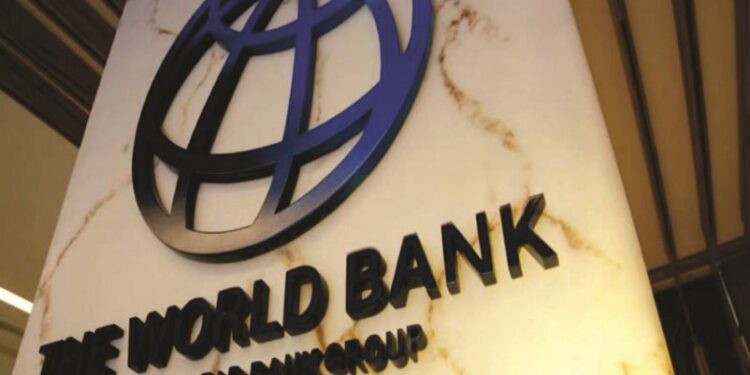
The Federal Government is engaging the World Bank for a fresh $1.25bn loan under a proposed programme aimed at expanding access to finance, digital services and electricity, while supporting reforms in tax administration, trade and agriculture.
The facility, titled Nigeria Actions for Investment and Jobs Acceleration, is structured as a Development Policy Financing operation, with the Federal Republic of Nigeria as borrower and the Federal Ministry of Finance as implementing agency.
According to a World Bank Programme Information Document, the proposed approval date for the facility is June 26, 2026, while the review process has already authorised the team to proceed with appraisal and negotiations after incorporating guidance and receiving legal evidence for prior actions completed.
The proposed development objective of the programme is to support the government’s efforts to improve access to finance, digital and electricity services, while strengthening competitiveness through tax, trade and agricultural reforms.
Read Also:
The World Bank stated that the financing would support Nigeria’s transition from macroeconomic stabilisation to inclusive economic growth and job creation.
The document read, “The proposed Development Policy Financing supports reforms initiated by the Government aimed at pivoting from stabilization to inclusive growth and job creation. The $1.25 billion standalone operation builds on recent progress in restoring stability and underpins the Government’s shift toward an inclusive growth model.”
The bank said the programme builds on recent stabilisation gains and supports Nigeria’s long-term growth strategy targeted at achieving seven per cent economic growth through a private sector-led and public sector-facilitated model.
According to the document, the first pillar of the programme will focus on improving access to finance, digital services and electricity.
The programme is expected to support the implementation of the Investment and Securities Act 2025, operationalisation of credit enhancement facilities, adoption of the National Digital Economy and E-Governance Bill, establishment of a national metering framework and expansion of private participation in interconnected mini-grids.
The second pillar will focus on competitiveness through trade, tax and agricultural reforms, including the reduction of trade barriers, improvements in seed supply systems, implementation of VAT e-invoicing and introduction of a minimum effective corporate tax rate.
The World Bank stated that Nigeria had implemented major reforms since 2023, including the removal of petrol subsidy, unification of the foreign exchange market, suspension of Central Bank deficit financing and strengthening of revenue administration.
According to the bank, these measures have helped restore macroeconomic stability, improve revenues, narrow the fiscal deficit, ease debt pressures, increase foreign reserves, reduce exchange rate volatility and improve investor confidence.
However, the institution warned that Nigeria had not yet transitioned decisively into a higher and inclusive growth path.
The bank noted that economic growth remained modest, while per capita income growth was still below two per cent.
It further stated that 63 per cent of Nigerians, representing more than 139 million people, remained in poverty in 2025.
The document identified shallow financial intermediation, weak competition, high trade barriers, low-productivity agriculture, infrastructure deficits in power, transport and digital connectivity, as well as weak governance structures, as major constraints to faster economic growth.
Despite supporting the proposed reforms, the World Bank assessed the overall risk of the operation as high.
The institution cited political and governance risks ahead of the 2027 general elections, macroeconomic vulnerability linked to oil price volatility, inflationary pressures arising from prolonged Middle East tensions, possible setbacks in revenue reforms, election-related spending pressures and weak coordination among ministries and agencies.
The bank also highlighted fiduciary and social risks associated with trade reforms and broader economic restructuring measures.
The proposed loan comes as the Federal Government continues efforts to stabilise public finances, deepen structural reforms and attract private sector investment to support long-term economic growth and employment generation in the country.