
Africa Business Review
Illegal Immigration Driving Social Tensions in South Africa – Ramaphosa

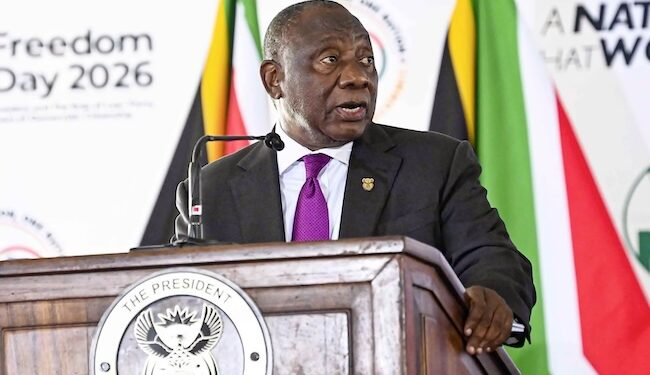
South African President Cyril Ramaphosa has linked rising xenophobic tensions in the country to increasing illegal immigration, warning that undocumented migration is intensifying pressure on jobs, public services and social stability in vulnerable communities.
The remarks were contained in a statement released by the South African Presidency amid renewed attacks and harassment targeting foreign nationals and foreign-owned businesses in Johannesburg and surrounding areas.
Ramaphosa condemned the recent violence, stressing that the attacks did not represent the values of South Africans or the official position of the government.
“The recent violent protests and criminal acts directed at foreign nationals in parts of our country do not represent the views of South Africa’s people nor reflect our government’s policy,” the President stated.
He said criminal groups were exploiting socio-economic frustrations in poorer communities to incite hostility against migrants and foreign business operators.
At the same time, Ramaphosa acknowledged that illegal immigration had become a growing concern affecting labour markets, public infrastructure and service delivery across the country.
“At the same time, as a society, we need to deal decisively – and within the law – with the challenge of illegal immigration, which risks our social stability, governance and national security,” he said.
According to the President, undocumented migration has increased pressure on healthcare facilities, housing systems and municipal services, particularly in economically disadvantaged communities already struggling with unemployment and poverty.
Read Also:
- Nigeria, South Africa Deepen Legislative Ties with New MoU
- Google Picks Four Nigerian Startups for Accelerator Africa Cohort
He added that the labour market was also being distorted as some employers hired undocumented foreign workers at lower wages instead of employing South African citizens.
Ramaphosa stated that government agencies would intensify enforcement efforts through the Border Management Authority and other security institutions to address immigration-related violations.
He also warned employers against violating immigration and labour laws by engaging undocumented migrants.
The Presidency said authorities would continue to strengthen border management systems while ensuring that enforcement measures remain within constitutional and legal frameworks.
The latest comments come amid renewed tensions in parts of Johannesburg and nearby communities, where foreign-owned shops and businesses have reportedly been targeted during protests and disturbances linked to economic hardship and unemployment.
South Africa has faced repeated outbreaks of xenophobic violence over the past decade, with attacks often directed at African migrants operating businesses in urban settlements and informal markets.
Analysts have linked the recurring tensions to high unemployment, deepening inequality, poor service delivery and competition within the informal economy.
Foreign-owned shops frequently operate alongside local traders in densely populated communities, sometimes resulting in disputes over pricing, market access and regulatory compliance.
Previous outbreaks of xenophobic violence in 2008 and 2015 led to deaths, displacement of migrants and diplomatic tensions between South Africa and several African countries.
The latest developments have again placed immigration policy and border enforcement at the centre of political debate in South Africa as the government faces growing pressure to address both unemployment and public dissatisfaction over service delivery.
The administration has maintained that undocumented migration must be tackled through lawful and institutional measures rather than mob violence or attacks on foreign nationals.
Ramaphosa reiterated that South Africa remained committed to constitutional values, regional cooperation and the protection of human rights despite growing frustrations in some communities.
The President’s comments also reflect broader concerns about national security, economic inclusion and social cohesion as Africa’s most industrialised economy continues to grapple with weak economic growth and persistently high unemployment levels.
Recent economic challenges, rising living costs and infrastructure pressures have further heightened tensions in low-income areas where access to jobs and public resources remains limited.
Government officials have repeatedly warned against the politicisation of migration issues, cautioning that violence against foreigners could damage South Africa’s international image and regional relations.
The South African government has also continued discussions around immigration reforms, border control improvements and labour market regulation aimed at balancing economic needs with national security concerns.
Observers say the latest unrest underscores the continuing challenge facing the government in addressing structural economic inequalities while maintaining social stability in urban communities.
The renewed violence has already drawn concern from civil society groups and regional observers, who have urged authorities to protect foreign nationals and ensure accountability for attacks targeting migrants and their businesses.
The Presidency maintained that security agencies would continue monitoring affected communities while working to prevent further escalation of violence and unrest.
Ramaphosa said efforts to tackle illegal immigration would be pursued within the framework of the law, while the government simultaneously works to address the socio-economic conditions fuelling tensions in vulnerable communities.