Business Briefings
Rising transport costs push food prices higher ahead of Easter

By: Amarachi Okonkwo
Rising fuel costs linked to global oil tensions have triggered a fresh spike in food prices across Nigeria, forcing households to cut back on Easter spending amid weakening purchasing power.
What is typically a season of abundance and festivity is fast becoming a period of financial restraint, as families grapple with declining purchasing power and unpredictable market prices. A recent survey of key markets shows consumers are scaling back spending, with many prioritising essentials over traditional Easter indulgences.
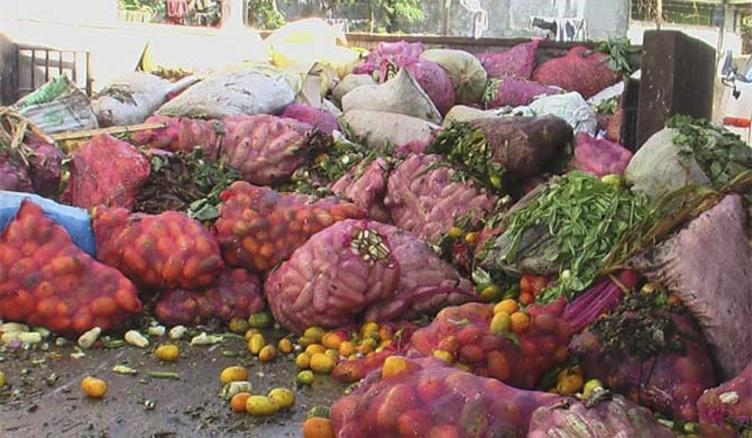
At Mile 12 Market, one of Lagos’ largest food hubs, price increases have been particularly sharp. Traders report that staple items commonly associated with Easter meals have recorded significant hikes within weeks.
A 50kg bag of rice now sells for about N61,000, up from an average of N56,000 in January, depending on brand and grain quality. Similarly, a carton of ‘orobo’ chicken has climbed to N54,000 from N50,000 in recent weeks, while frozen chicken portions have also risen noticeably in retail markets.
The surge in prices is largely attributed to rising fuel costs, which have significantly increased transportation expenses. This follows escalating geopolitical tensions between the United States and Iran, particularly around the Strait of Hormuz, a critical global oil transit route. Disruptions in oil flows have pushed crude prices to their highest levels since 2022, with petrol prices in Nigeria hovering around N1,300 per litre.
The ripple effect on food logistics has been immediate. With Nigeria’s heavy reliance on petrol-powered transportation for moving agricultural produce from rural areas to urban centres, higher fuel prices translate directly into higher food costs.
Victoria Ada, a retired school teacher in Lagos, described the situation as increasingly difficult for households on fixed incomes.
“Every day you go to the market, food prices have risen. One cannot adequately plan with a fixed income,” she said. “Two weeks ago, I bought a kilo of frozen chicken for N5,500; today it is N6,000. How can I budget or celebrate Easter with my family if I’m not even sure of what prices will be by the weekend?”
The impact is also being felt by retailers. Oluwaseun Okiki, a shop manager, noted that consumer demand has weakened significantly despite the festive period.
“Usually by this time, people would have started buying drinks ahead of Easter, but that hasn’t happened. Sales are still very slow,” he said.
For traders, rising costs are squeezing already thin margins. Mummy Amoke, a frozen food seller, said escalating energy and procurement costs are forcing price adjustments that customers often blame on retailers.
“I cannot even buy turkey from the market because the price is so high. A carton is around N100,000. How do I sell and still make profit?” she asked.
Earlier in the year, there had been signs of relief. Data from the National Bureau of Statistics showed food inflation easing to 8.89 percent in January, 2026 the first single-digit figure since 2015. However, that progress has proven short-lived.
Following the outbreak of the US-Iran conflict in February, food inflation reversed course, rising to 12.12 percent, underscoring the vulnerability of Nigeria’s food supply chain to global shocks.
Industry stakeholders say logistics remains a major cost driver. Ayodeji Balogun, Group Chief Executive Officer of AFEX, estimates that transportation accounts for about 15 percent of the cost of moving produce from northern farms to markets in Lagos.
He noted that improving local production through mechanised farming, particularly in southern Nigeria, could help reduce reliance on long-haul transportation and stabilise prices over time.
As it stands, however, rising transport costs and weakening consumer purchasing power are reshaping spending patterns. Many households are cutting back on traditional Easter purchases, turning what is typically a vibrant festive season into a subdued period marked more by caution than celebration.
The development highlights the broader economic strain facing consumers and businesses alike, as global energy shocks continue to filter into domestic markets, amplifying the cost-of-living crisis.