Business Briefings
Nigeria External Reserves Rise to $49.49bn-Cardoso

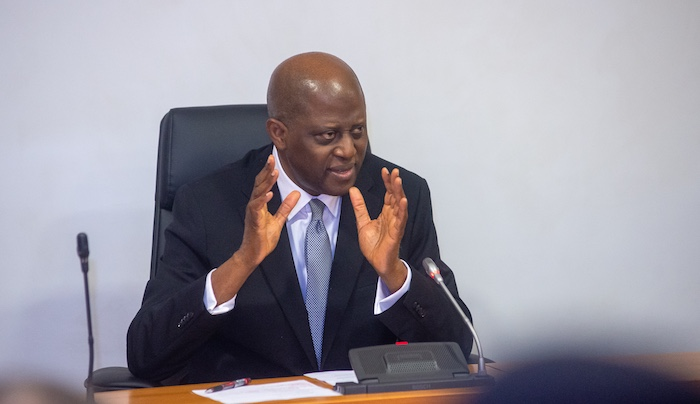
Central Bank of Nigeria Governor Olayemi Cardoso has disclosed that Nigeria’s gross external reserves increased to $49.49 billion as of May 15, 2026, reflecting a rebound from the $48.35 billion recorded at the end of March.
Cardoso announced the development at the conclusion of the 305th Monetary Policy Committee meeting held in Abuja.
The latest increase in reserves signals easing pressure on monetary authorities as the apex bank continues efforts to balance exchange rate stability, liquidity management and external obligations.
Speaking after the MPC meeting, Cardoso said the country’s reserve position remains strong enough to cover more than nine months of imports for goods and services.
“Gross external reserve remained robust at $49.49 billion as of May 15, 2026, compared with $48.35 billion at the end of March 2026, sufficient to cover 9.04 months of imports for goods and services,” Cardoso stated.
“This strong buffer continues to reinforce investor confidence in the Nigerian economy and support exchange rate stability,” he added.
According to the CBN governor, the improvement in reserve levels reflects growing confidence in Nigeria’s foreign exchange management framework and ongoing market reforms introduced by the apex bank.
Nigeria’s external reserves had experienced sustained pressure in recent weeks before the latest rebound.
CBN data showed that reserves declined by approximately $855 million within five weeks, falling from $49.18 billion on April 1, 2026, to $48.33 billion as of May 7.
The reserves dropped from $49.133 billion on April 2 to $48.940 billion on April 7 before declining further to $48.675 billion on April 15.
Reserve levels later weakened to $48.541 billion on April 20 and declined further to $48.364 billion by April 30.
By May 7, reserves had settled at $48.325 billion, raising concerns among market participants over the sustainability of foreign exchange inflows amid rising demand pressures.
Despite the temporary decline, reserve levels remained significantly above the figures recorded during the corresponding period in the previous year.
Cardoso had earlier downplayed concerns surrounding the fluctuations in reserve levels, describing the movements as normal within the current global market environment.
Speaking during a briefing at the International Monetary Fund Spring Meetings in April, the CBN governor said market reactions to moderate reserve movements were often exaggerated.
“In fact, what concerns me is not so much the decline in reserves, but the reaction to relatively small swings in the numbers, which in today’s market environment should not trigger anxiety,” Cardoso said.
He stressed that Nigeria’s reserve position remains comfortably above the International Monetary Fund benchmark of three to six months of import cover.
According to him, the country’s foreign exchange buffers remain adequate to support macroeconomic stability, investor confidence and exchange rate management.
Cardoso also linked the reserve performance to ongoing foreign exchange market reforms aimed at improving transparency, attracting inflows and enhancing overall market efficiency.
Market observers said stronger reserve levels could improve the country’s ability to manage external shocks, support import financing and sustain confidence in ongoing monetary and fiscal reforms.
The development comes as the CBN continues to implement measures targeted at stabilising the naira, improving liquidity conditions and strengthening confidence in Nigeria’s financial markets.