Business Briefings
Nigeria faces $14bn annual infrastructure gap, seeks global financing push

By: Amarachi Okonkwo
Nigeria is intensifying efforts to close a $14bn annual infrastructure investment gap, with the Federal Government turning to strategic partnerships, innovative financing, and private sector capital to accelerate development across key sectors.
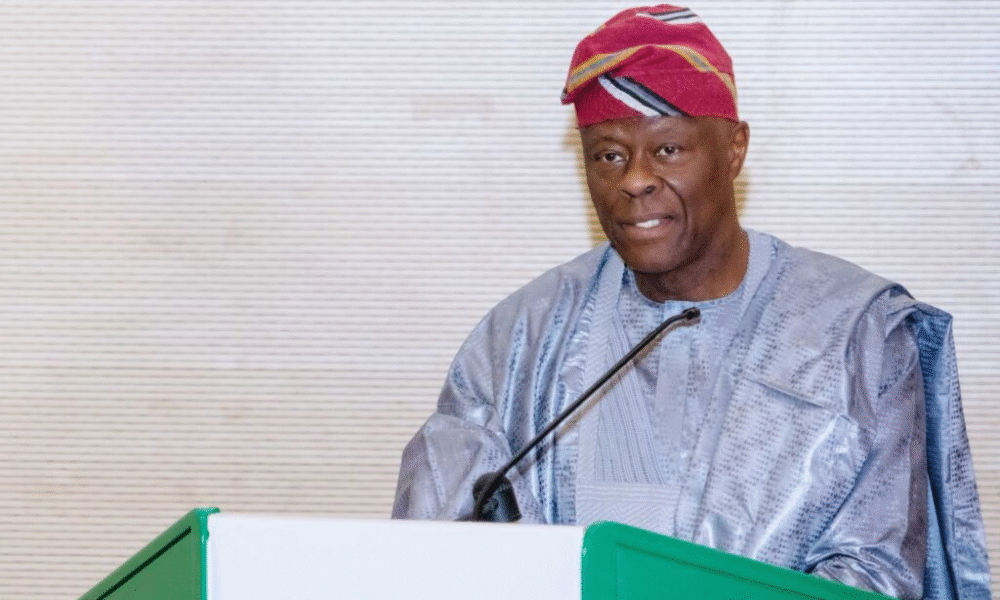
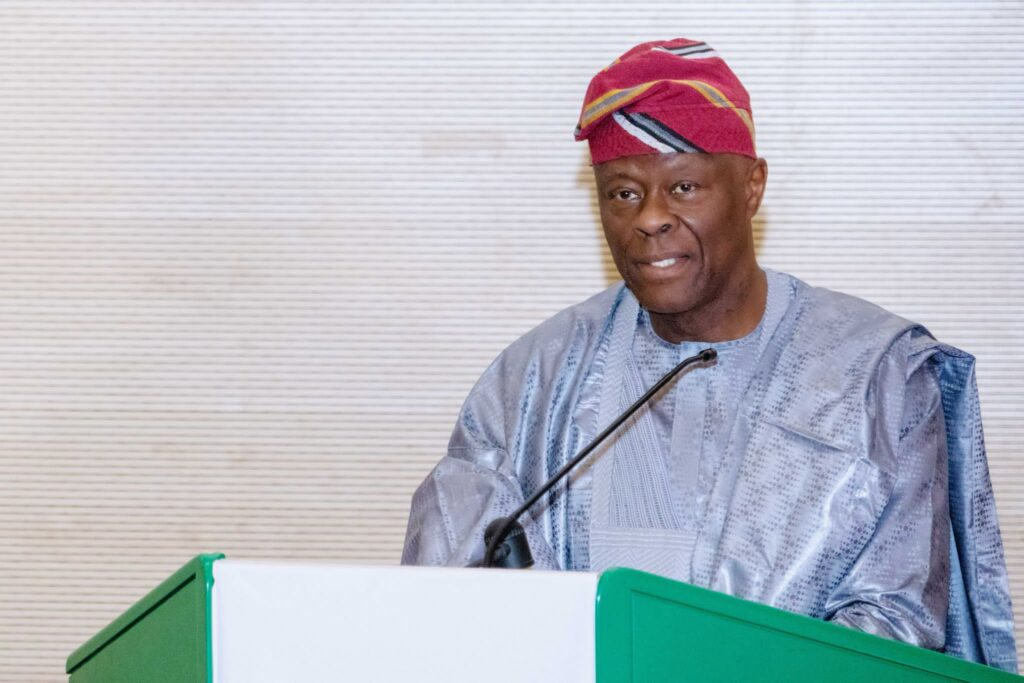
The Minister of Finance and Coordinating Minister for the Economy, Olawale Edun, disclosed this on Monday in Lagos during the signing of a 2026–2028 partnership agreement with the Islamic Development Bank Group.
The agreement, signed alongside the bank’s delegation led by Anasse Aissami, marks a renewed push to mobilise large-scale financing for critical infrastructure and human capital development.
Edun said Nigeria’s infrastructure deficit—estimated at $14bn annually—requires urgent and coordinated intervention, stressing that public financing alone is insufficient to meet the country’s growing needs.
“Our strategic partnership with IsDB is to move our priorities into action through scalable, transformative projects,” Edun said. “We are focusing on sustainable infrastructure for economic transformation, spanning roads, rail, ports, energy, agriculture, and digital systems.”
Private Capital Takes Centre Stage
With government spending accounting for a limited share of the economy, Edun emphasised a strategic shift towards private sector-led growth. According to him, roughly 90 per cent of Nigeria’s economy is driven by private enterprise, making it essential to attract and de-risk private investment.
The government is therefore expanding the use of alternative financing instruments, particularly Islamic finance tools such as Sukuk, alongside asset securitisation and blended finance models.
“We need to move from reliance on public funding to private capital-led growth; from traditional borrowing to innovative financing; and from risk exposure to risk-sharing mechanisms,” he said.
This approach is being implemented under flagship initiatives like the Renewed Hope Infrastructure Development Fund, which aims to channel capital into large-scale projects capable of unlocking productivity and economic expansion.
Read Also:
- Nigeria gas output hits 7.5bcf/d, targets 12bcf/d by 2030
- NUPRC Shortlists Bidders for Nigeria’s Oil Licensing Round
Focus on Infrastructure and Social Development
The partnership with IsDB is structured around two core pillars: sustainable infrastructure and human capital development.
On infrastructure, priority areas include transport networks, power generation, renewable energy, logistics systems, and digital infrastructure. These investments are expected to enhance connectivity, reduce business costs, and improve overall economic efficiency.
At the same time, the collaboration extends to the social sector, with planned investments in health, education, and social protection programmes.
Edun linked these efforts to the Federal Government’s designation of 2026 as the “Year of Social Development,” which aims to drive inclusive growth and expand economic opportunities, particularly for vulnerable populations.
Central to this agenda is a nationwide programme targeting millions of Nigerians across all 774 local governments and over 8,800 wards, with a focus on empowering micro, small, and medium enterprises (MSMEs).
Digital Identity and Inclusion
Highlighting progress in social protection delivery, Edun noted that over 100 million Nigerians have been enrolled under the National Identity Number (NIN) system, enabling targeted and transparent digital payments.
The digital ID framework, he said, allows the government to identify beneficiaries accurately and deliver financial support efficiently, strengthening trust and accountability in social programmes.
“From a growing economy, through job creation, we can lift people out of poverty,” Edun said, underscoring the link between infrastructure investment, economic expansion, and improved living standards.
IsDB Expands Nigeria Portfolio
Speaking at the event, Aissami reaffirmed the IsDB Group’s commitment to Nigeria’s long-term development, noting that the bank’s current portfolio spans 148 projects worth about $2bn across 21 states.
He said the new partnership framework signals a shift from isolated interventions to integrated, large-scale solutions aligned with Nigeria’s national priorities.
“The country programme marks a new era of strategic synergy,” Aissami said. “We are supporting Nigeria’s transition toward a diversified, high-growth economy, driven by a strong private sector.”
The bank’s interventions will focus on infrastructure development, trade financing, renewable energy, education, healthcare, and capacity building.
Reform Momentum and Investment Outlook
Edun also pointed to ongoing economic reforms aimed at stabilising the macroeconomic environment, including the removal of long-standing distortions that have weighed on growth.
He noted early signs of improvement, with inflation beginning to moderate and investor confidence gradually strengthening.
The government, he said, is now shifting from stabilisation to growth acceleration prioritising large-scale infrastructure projects, job creation, and expanded private sector participation.
“With a youthful population and rising demand, Nigeria must grow faster and more inclusively,” Edun said. “Our goal is to position the country as a leading destination for scalable, bankable investment.”
The partnership with the Islamic Development Bank Group is expected to play a critical role in achieving that objective, mobilising both domestic and international capital to bridge the infrastructure gap and support sustainable economic growth.