Business Briefings
Nigeria partners with South Korea to launch Africa’s first EV manufacturing hub

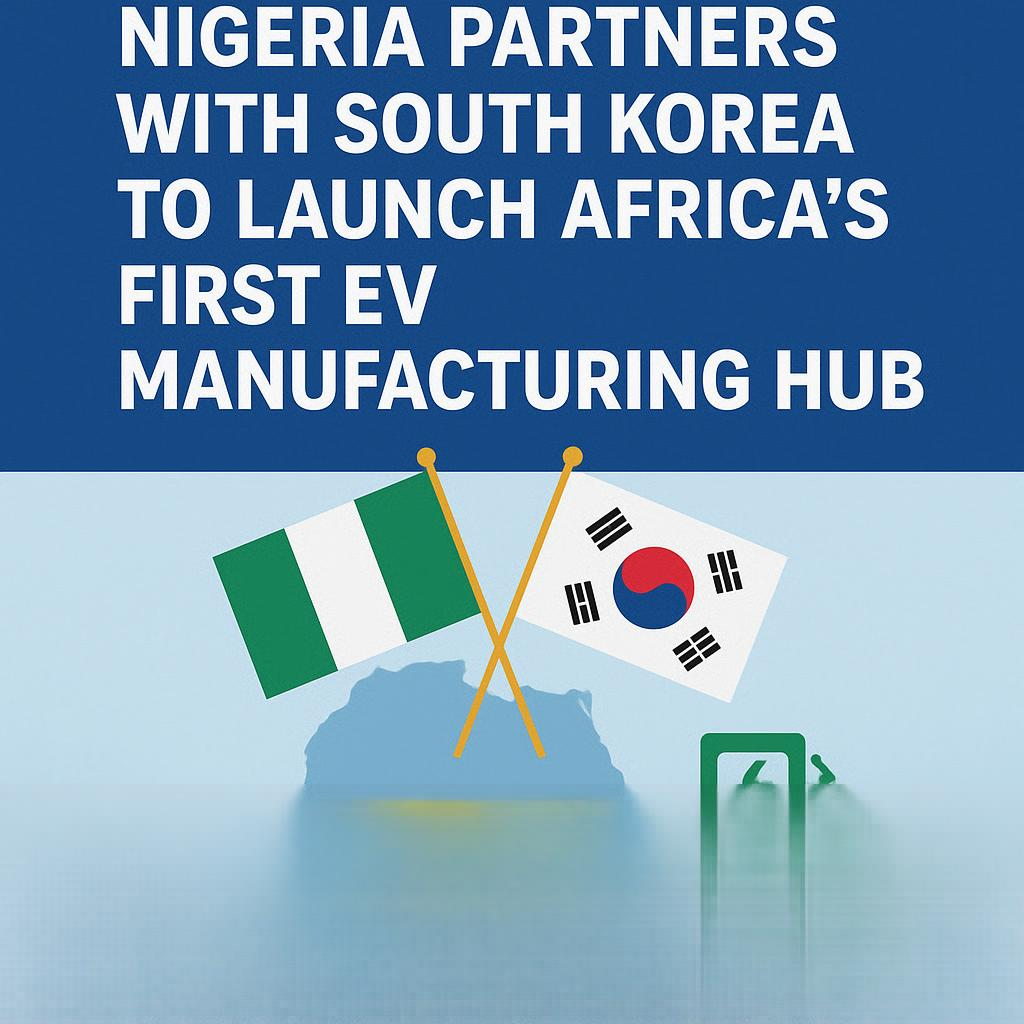
Nigeria has moved to establish Africa’s first electric vehicle (EV) manufacturing facility through a partnership with the Asia Economic Development Committee (AEDC) of South Korea, in a strategic push to modernise the automotive sector and accelerate the country’s energy transition agenda.
The Memorandum of Understanding (MOU), signed on behalf of the Nigerian government by the Minister of State for Industry, Trade, and Investment, lays the groundwork for a phased project that will start with vehicle assembly and eventually transition into full-scale local EV manufacturing.
Once operational, the facility is projected to produce up to 300,000 electric vehicles annually and create approximately 10,000 jobs, spanning engineering, production, research, and maintenance roles. Authorities said the initiative will also foster skills development, technology transfer, and innovation in automotive design and manufacturing.
“The project represents a major step toward Nigeria’s energy transition goals and positions the country as a regional leader in clean transportation,” said the Director-General of the National Automotive Design and Development Council (NADDC). “It will also strengthen our local supply chain and encourage private sector investment in sustainable mobility.”
Strategic alignment with national policies
Officials noted that the EV plant aligns with Nigeria’s National Energy Transition Plan (ETP) and National Automotive Industry Development Plan (NAIDP), which aim to reduce reliance on fossil fuels, increase local production, and improve industrial competitiveness. The government sees the initiative as critical to meeting future targets for electric vehicle adoption in major cities, including Lagos, which has committed to a full transition by 2050.
Interest in electric vehicles in Nigeria has been rising despite obstacles such as inconsistent electricity supply, limited charging infrastructure, and poor road networks. Analysts suggest that while initial adoption may be slow, government support, private sector investment, and partnerships like this could rapidly expand EV production and usage.
“The success of this programme will depend on complementary investments in charging networks, skilled manpower, and supportive policies,” said an industry expert. “If implemented well, it could transform Nigeria’s automotive landscape and set a benchmark for Africa.”
The Federal Government aims for the EV initiative to drive technology transfer, stimulate research and development, and create a sustainable automotive ecosystem. The partnership with AEDC is also expected to attract foreign investment and strengthen Nigeria’s global competitiveness in green mobility solutions.