Business Briefings
MMA2 regional flights set to ease Lagos Airport gridlock, but gaps persist

By: Amarachi Okonkwo
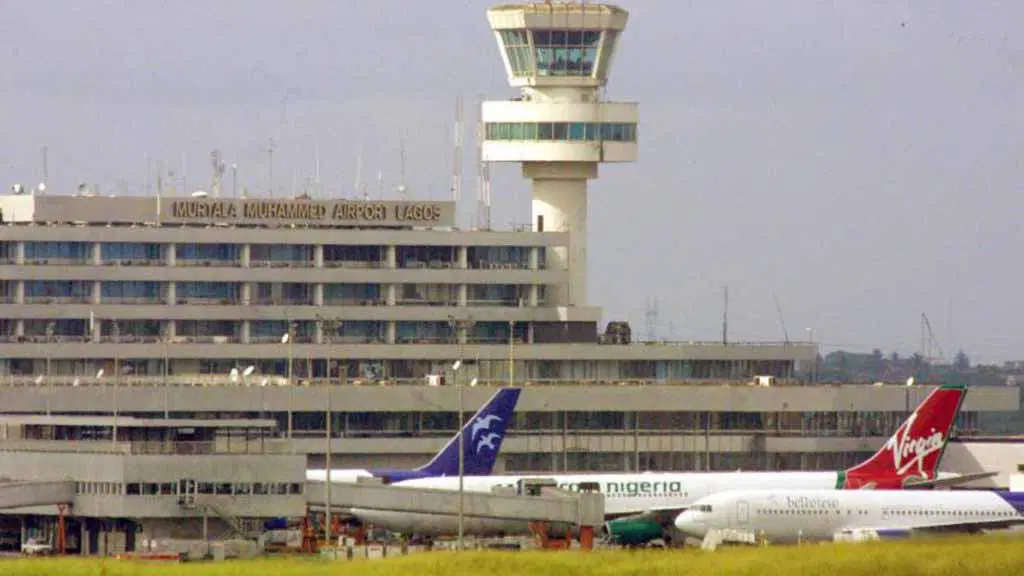
The long-anticipated launch of regional flight operations at Murtala Muhammed Airport Terminal Two (MMA2) is being positioned as a strategic response to mounting congestion at Murtala Muhammed International Airport (MMIA), Nigeria’s busiest aviation hub.
Industry observers say the shift could broaden passenger options and redistribute traffic, but warn that structural limitations may blunt its full impact.
MMIA is currently under significant operational strain, driven by a sharp 11.8 per cent increase in air traffic in 2025 the fastest growth rate recorded across Africa. With more than 4.3 million international passengers annually, the airport faces persistent bottlenecks, particularly around apron capacity and terminal throughput.
The federal government’s recent 20-year legal settlement with Bi-Courtney Aviation Services Limited was intended to provide immediate relief by enabling regional operations from MMA2. However, questions remain over the terminal’s readiness to support sustained international traffic flows.
Seyi Adewale, CEO of Mainstream Cargo Limited, expressed cautious optimism, noting that the relocation of regional flights would help reduce congestion at the international terminal. According to him, airlines are currently clustered within Terminal 2 due to ongoing reconstruction at Terminal 1, intensifying operational pressure.
He added that the development introduces competitive dynamics among airlines, as operators weigh the opportunity costs of remaining at the international wing versus relocating to MMA2. “Some airlines will prefer to stay within the international terminal, while others may shift based on efficiency and cost considerations,” Adewale said.
Read Also:
- FG to Launch National Single Window Trade Platform, March 27
- FG ends 20-year MMA2 dispute, moves regional flights to Lagos terminal
MMA2 is expected to attract airlines with high-frequency regional routes, while also offering improved landside accessibility for passengers. Unlike MMIA’s international wing, which faces stricter access controls, MMA2 provides easier connectivity to airport roads and parking facilities.
Recent regional expansion underscores the growing importance of West African routes. In 2024, United Nigeria Airlines launched its inaugural Lagos Accra service, joining Air Peace and Ibom Air in servicing the corridor. The airline deployed a Bombardier CRJ900 aircraft and indicated plans to transition to Embraer E145 jets for future operations.
Regional competition also includes Africa World Airlines (AWA) and Asky Airlines, both of which operate multiple frequencies into Lagos. AWA is targeting an increase to three daily flights, while Asky continues to leverage its Lomé hub for seamless passenger transfers—an advantage Lagos currently lacks.
Despite the potential benefits, aviation stakeholders caution that inadequate infrastructure could create new inefficiencies. Alex Nwuba, president of the Aircraft Owners and Pilots Association of Nigeria, highlighted the absence of an integrated airside transfer system as a major drawback.
Passengers connecting from long-haul international flights to regional services at MMA2 must undergo full immigration clearance, retrieve baggage, and physically transfer between terminals. This fragmented process, often referred to as a “transfer trap,” undermines the seamless connectivity offered by competing hubs such as Accra and Lomé.
Nwuba noted that while the relocation of departures may ease outbound congestion, it does little to address inbound passenger volumes, baggage handling constraints, and apron limitations all of which remain concentrated at MMIA. “The policy may reduce pressure on departures, but arrivals and transit bottlenecks persist,” he said.
MMA2 itself faces spatial constraints, including limited expansion capacity due to its proximity to a Nigerian Air Force base, as well as restricted apron space. Without substantial investment in terminal expansion and integrated transfer systems, stakeholders warn that Lagos risks evolving into a fragmented dual-terminal system rather than a cohesive aviation hub.
The policy shift follows the resolution of a long-running concession dispute between the federal government and Bi-Courtney. Aviation Minister Festus Keyamo confirmed that the agreement, reached with Bi-Courtney chairman Wale Babalakin, settles issues dating back to 2003.
Under the new terms, Bi-Courtney will waive outstanding debt claims, relinquish control of MMA1 to the federal government, and drop exclusivity provisions. In exchange, the company regains rights to develop a previously stalled hotel and conference centre project near MMA2. The agreement also introduces a revenue-sharing framework, enabling the federal government to begin earning from MMA2 operations.
“Immediately after today, the federal government will now begin to earn its share from MMA2 operations,” Keyamo said.
However, industry analyst John Ojikutu, CEO of Centurion Aviation Security and Safety Consult, stressed that effective implementation will determine whether the policy delivers meaningful decongestion. He noted that regional operations were originally included in the 2006 concession agreement but were derailed by policy inconsistencies across successive administrations.
Ojikutu attributed the delays to political interference rather than technical limitations, drawing parallels with other stalled national infrastructure initiatives. He also recalled that earlier attempts to relocate airlines such as Virgin Nigeria and Arik Air to MMA2 were unsuccessful due to operator resistance.
As Lagos positions itself to capture a larger share of regional air traffic, the success of MMA2’s expanded role will hinge on coordinated infrastructure upgrades, regulatory clarity, and airline adoption. Without these, what is intended as a relief mechanism could instead introduce new layers of operational complexity in Nigeria’s already strained aviation ecosystem.