Business Briefings
OPEC moves to boost output by 188,000 bpd as UAE exit shakes market

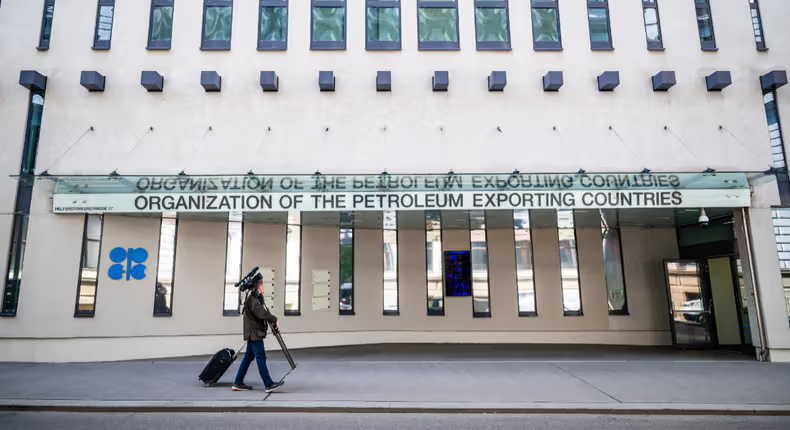
The Organization of the Petroleum Exporting Countries and its allies (OPEC+) have agreed to increase oil production by 188,000 barrels per day (bpd) in June, as the group continues efforts to stabilise global energy markets following supply disruptions and the recent exit of a key member.
The decision was announced in a statement released on Sunday after the alliance’s latest meeting its first since the formal departure of the United Arab Emirates on May 1. Notably, the June output adjustment excludes the UAE’s production quota.
The planned increase is slightly lower than May’s 206,000 bpd hike, signalling a cautious approach by the producers’ alliance as it navigates ongoing geopolitical and market uncertainties.
Read Also:
- Nigeria-backs-opec-as-uae-pullout-sparks-price-fears
- Dangote-ipo-to-test-africas-560bn-markets-as-oil-shock-rattles-economies
Participating Countries and Nigeria’s Struggles
The production increase will be shared among seven participating countries: Saudi Arabia, Russia, Iraq, Kuwait, Kazakhstan, Algeria, and Oman.
Nigeria, which maintains an official quota of 1.5 million bpd under the OPEC+ framework, continues to struggle with underproduction due to persistent challenges such as oil theft, pipeline vandalism, and underinvestment in upstream infrastructure.
Market Stability Efforts
According to OPEC, the latest adjustment reflects the group’s continued commitment to balancing supply and demand.
“In their collective commitment to support oil market stability, the seven participating countries decided to implement a production adjustment of 188,000 barrels per day,” the organisation stated.
The move comes against a backdrop of constrained global supply, largely driven by tensions linked to the ongoing conflict involving Iran, which began on February 28.
Strait of Hormuz Disruption and Price Movements
A major factor tightening supply has been the effective closure of the Strait of Hormuz a critical transit route for a significant share of the world’s oil and gas shipments.
However, oil prices eased over the weekend following renewed diplomatic signals. Iran reportedly submitted an updated peace proposal to mediators in Pakistan, raising cautious optimism about a potential resolution with the United States.
As a result:
U.S. crude futures fell 3% to $101.94 per barrel
Brent crude declined nearly 2% to $108.17 per barrel
Despite the dip, both benchmarks remain approximately 78% higher since the start of 2026.
U.S.–Iran Tensions in Focus
U.S. President Donald Trump confirmed awareness of a potential deal but noted that final details were still pending. He also warned that military action remains an option if diplomatic efforts fail.
Meanwhile, a senior Iranian official indicated that Tehran’s proposal could reopen the Strait of Hormuz and end the U.S. blockade, though discussions around Iran’s nuclear programme would be deferred.
However, the UAE’s departure has added a new layer of uncertainty to OPEC’s cohesion and long-term strategy. As the cartel’s third-largest producer prior to its exit — behind Saudi Arabia and Iraq the UAE had played a central role in shaping policy for nearly six decades.
Its Energy Ministry said the decision followed a comprehensive review of its production strategy and national interests.
OPEC+ is scheduled to meet again on June 7, where members are expected to reassess market conditions, compliance levels, and geopolitical developments before deciding on further production adjustments.
The combination of supply constraints, geopolitical tensions, and shifting alliance dynamics suggests continued volatility in global oil markets in the months ahead.