Business Briefings
Nigeria backs OPEC as UAE pullout sparks price fears

By: Amarachi Okonkwo
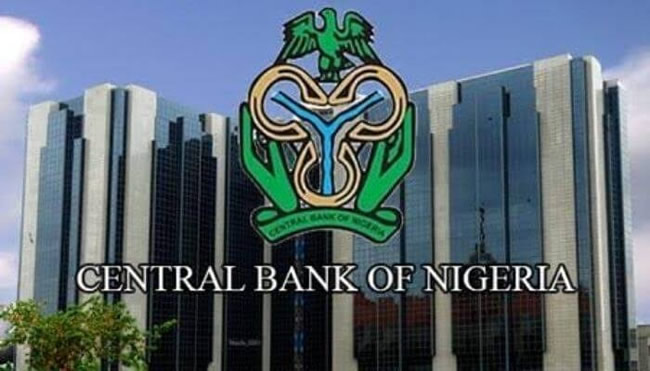
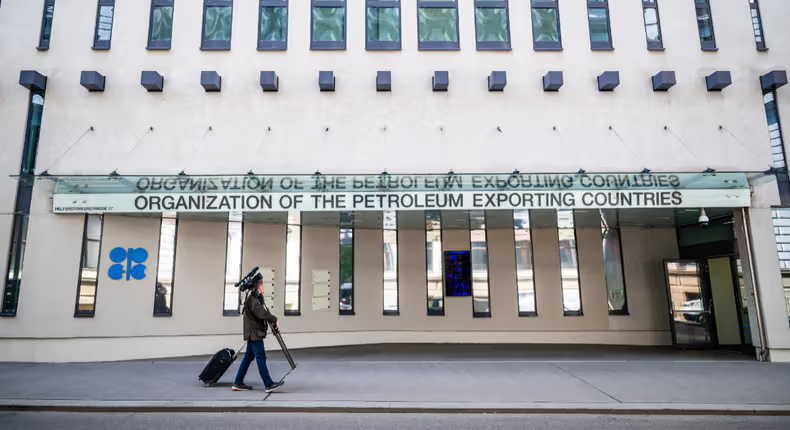
Nigeria has reaffirmed its commitment to the Organization of the Petroleum Exporting Countries and the broader OPEC+ alliance, even as fresh concerns emerge over the potential impact of the United Arab Emirates’ planned exit from the cartel on global oil prices and the country’s revenue outlook.
Senior officials at the Federal Ministry of Petroleum Resources stated that Nigeria remains firmly aligned with the principles of the Declaration of Cooperation, the framework binding OPEC and its allies, describing it as critical to stabilising global oil markets.
According to the officials, who spoke on condition of anonymity due to ongoing internal discussions, the government views OPEC and OPEC+ as indispensable platforms for managing crude supply, reducing market volatility, and fostering a predictable pricing environment.
“The country remains firmly committed to the principles and objectives of the Declaration of Cooperation between OPEC and its allies under OPEC+. This underscores Nigeria’s continued alignment with collective efforts aimed at ensuring stability in the global oil market,” one official said.
“Nigeria recognises the critical role of OPEC and OPEC+ in managing oil supply, reducing market volatility, and fostering a more predictable pricing environment. These coordinated efforts are vital to sustaining global economic stability and supporting long-term energy development.”
Another senior official emphasised that Nigeria would continue to comply with agreed production frameworks while actively engaging with member countries to strengthen cooperation and maintain market balance, although national interest would remain paramount.
“This reflects a balanced approach demonstrating strong support for multilateral energy cooperation while safeguarding domestic economic priorities in an evolving global energy landscape,” the source added.
UAE exit raises market concerns
The government’s reassurance comes as the UAE prepares to formally exit OPEC effective May 1, 2026, a move expected to remove about 1.2 billion barrels of annual crude production from the cartel’s coordinated supply system.
Data reviews show that the UAE produced an average of 3.36 million barrels per day in 2025 around 12 per cent of OPEC’s total output making it one of the group’s most influential producers.
Read Also:
- Zichis Agro-Allied Plans IPO as Investor Appetite Surges
- ACCI targets $500m commitments at AGROMEQA Expo 2026
While some analysts argue that Nigeria could benefit from a potential increase in production quotas following the exit, energy experts warn that the broader implications could be negative, particularly if the move weakens OPEC’s ability to influence global oil prices.
Energy economist Wumi Iledare said the development reflects deeper structural tensions within the alliance.
“The speculation around a possible UAE exit points to a structural issue growing tension between expanded production capacity and quota constraints within OPEC+,” he said.
“Countries that have invested heavily in capacity, like the UAE, have strong incentives to prioritise volume over collective price management. If this trend persists, OPEC’s ability to enforce discipline may weaken gradually through rising non-compliance.”
Nigeria faces “dual risk”
Iledare warned that Nigeria faces a dual risk in the evolving oil market, falling prices in a less coordinated system and persistent domestic production challenges.
“For Nigeria, the risks are twofold: potential downward pressure on oil prices and continued domestic underperformance, including production shortfalls, high costs, and leakages,” he said.
He advised policymakers to prepare for a future where OPEC’s price-stabilising role becomes less reliable by improving operational efficiency, reducing costs, adopting conservative fiscal assumptions, and accelerating gas-led diversification.
Similarly, the Chief Executive Officer of the Centre for the Promotion of Private Enterprise, Muda Yusuf, said the UAE’s exit could weaken OPEC’s influence and negatively impact Nigeria’s earnings.
“I think the exit of the UAE from OPEC is likely to be a disadvantage for Nigeria,” Yusuf said. “The organisation’s ability to influence prices diminishes when a major producer leaves, and that could lead to lower prices as the UAE ramps up production independently.”
He noted that higher production quotas for Nigeria may not necessarily translate into increased revenue.
“We may have more quota, but if prices fall, revenue will still decline. A weaker OPEC limits the ability to manage supply effectively, which could create a downside risk for oil-dependent economies like Nigeria,” he said.
Yusuf also warned of a worst-case scenario. “If prices weaken and output remains constrained domestically, that becomes a double shock for Nigeria.”
Call for urgent reforms
Experts say Nigeria’s best response lies in addressing long-standing structural challenges in its oil sector.
Yusuf urged the government to boost crude production, reduce reliance on exports of unrefined oil, and scale up refined petroleum exports to cushion potential revenue shocks.
“We need to improve output so that even if prices weaken, volumes can support revenue. Beyond that, Nigeria must reduce dependence on crude exports and expand refined product capacity,” he said.
The UAE, which joined OPEC in 1967, said its decision followed a strategic review of its long-term energy priorities and investment direction.
Founded in 1960, OPEC has historically played a central role in stabilising oil markets through coordinated production adjustments. However, internal disagreements, shifting national priorities, and the global energy transition have increasingly tested the cohesion of the alliance.
Against this backdrop, Nigeria’s renewed commitment signals continued reliance on multilateral coordination to support oil prices. However, analysts caution that without urgent domestic reforms, Africa’s largest oil producer may struggle to navigate a more volatile and competitive global energy landscape.