
Business Briefings
Tinubu Appoints Retired Major General Fadewa As Homeland Security Adviser

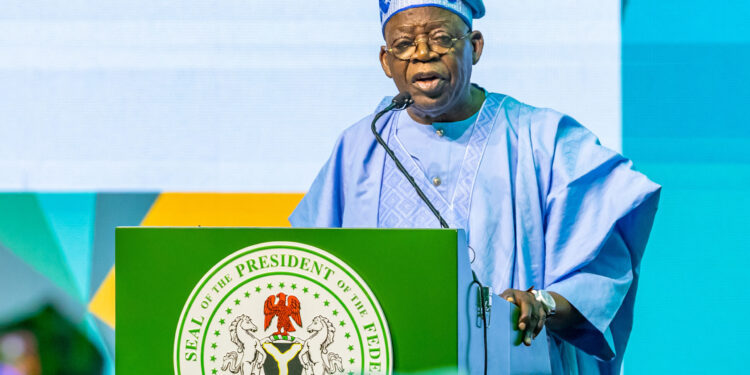
President Bola Ahmed Tinubu has approved the appointment of retired Major General Adeyinka A. Fadewa as Special Adviser on Homeland Security as part of efforts to strengthen intelligence coordination and internal security management across the country.
The appointment was announced in a statement signed by the Secretary to the Government of the Federation, George Akume, and issued by the Permanent Secretary, General Services Office, Dr. Ibrahim Abubakar Kana.
Read Also:
crude-oil-surges-above-105-after-trump-rejects-iran-peace-proposal
According to the presidency, the appointment reflects the administration’s commitment to deepening intelligence-driven security operations, improving interagency cooperation, and strengthening national responses to emerging security threats.
The statement described Fadewa as a retired senior military officer with more than three decades of experience spanning military operations, intelligence coordination, counterterrorism, and international security diplomacy.
The presidency stated that his professional background combines operational experience, institutional leadership, and strategic expertise in national security management.
“As Principal General Staff Officer to the National Security Adviser at the Office of the National Security Adviser (ONSA) from 2015 to 2021, he played a pivotal role in shaping Nigeria’s modern intelligence coordination framework,” the statement said.
It added that Fadewa was instrumental in establishing the Intelligence Fusion Centre at the Office of the National Security Adviser.
“He spearheaded the establishment of the Intelligence Fusion Centre (IFC) at ONSA, creating an integrated multi-agency intelligence platform that brought together the Defence Intelligence Agency (DIA), National Intelligence Agency (NIA), Department of State Services (DSS), the Nigeria Police Force, and the Armed Forces to improve national threat assessment and strategic response coordination,” the statement added.
According to the presidency, the Intelligence Fusion Centre was designed to enhance information sharing among security agencies and strengthen coordinated responses to terrorism, insurgency, organised crime, and other security threats confronting the country.
The appointment comes at a time when Nigeria continues to face security challenges across several regions, including terrorism, banditry, kidnapping, pipeline vandalism, cybercrime, and communal violence.
Security analysts have repeatedly called for stronger intelligence coordination and improved collaboration among law enforcement and military agencies to enhance national security operations.
The presidency noted that Fadewa’s experience within the Office of the National Security Adviser places him in a strategic position to support ongoing reforms aimed at strengthening internal security architecture and intelligence management.
Following his retirement from military service, Fadewa joined the Nigerian Army Resource Centre as a Senior Research Fellow, where he contributed to policy discussions relating to policing reforms, civil-security cooperation, and national security strategy.
The retired general is also the author of a monograph titled “Policing and National Security in Nigeria,” which focuses on frameworks for improving collaboration between civil authorities and security institutions.
According to the presidency, the appointment aligns with broader efforts by the Tinubu administration to improve proactive threat management, intelligence integration, and national emergency response mechanisms.
President Tinubu expressed confidence in Fadewa’s ability to support the administration’s homeland security objectives and strengthen coordination among security institutions.
The President also urged the retired military officer to deploy his experience and strategic expertise in advancing the administration’s Renewed Hope Agenda.
The appointment adds to a series of security-related reforms and appointments introduced by the current administration since assuming office.
The Federal Government has repeatedly stated that strengthening national security remains a critical priority because of its direct impact on economic growth, investor confidence, and social stability.
Analysts noted that intelligence gathering and coordination have become increasingly important in addressing evolving security threats, particularly those involving cross-border criminal activities, terrorism financing, cyber threats, and organised criminal networks.
The Office of the National Security Adviser has continued to play a central role in coordinating security intelligence and strategic planning among Nigeria’s security agencies.
The presidency stated that the new appointment is expected to further enhance synergy among agencies involved in intelligence operations and internal security management.
Industry observers also noted that the creation of the Intelligence Fusion Centre during Fadewa’s previous tenure at ONSA represented a significant step toward institutionalising interagency collaboration in Nigeria’s security framework.
The government has maintained that sustained collaboration among intelligence and security institutions remains necessary for effective national security management.
The appointment is expected to strengthen ongoing efforts to improve intelligence-led operations, support national risk assessment frameworks, and improve crisis response coordination across the country.
Stakeholders within the security sector are expected to monitor how the new advisory role contributes to broader reforms aimed at addressing persistent security challenges and improving operational efficiency among security agencies.