Data
Nigeria’s Money Supply Climbs to N119 Trillion in October

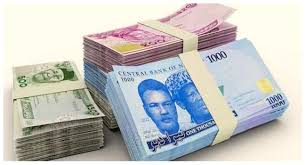
Nigeria’s broad money supply rose to N119.04 trillion in October 2025, up from N117.78 trillion in September, according to new figures released by the Central Bank of Nigeria (CBN). The increase of N1.25 trillion, representing 1.06 percent, reversed the slowdown recorded the previous month.
On a year‑on‑year basis, M3 (broad money supply) expanded by N11.04 trillion or 10.22 percent compared to N107.99 trillion in October 2024. This reflects a continued build‑up of liquidity in the financial system despite a relatively tight monetary environment.
The October rise followed the Monetary Policy Committee’s decision in September 2025 to cut the Monetary Policy Rate by 50 basis points to 27 percent, marking the first rate reduction since 2020. The cut was made as inflation began to ease and foreign exchange conditions improved.
Read Also:
Broad money supply, which covers narrow money, quasi‑money, and other liquid assets, strengthened in the month after the rate cut, showing higher availability of cash and near‑cash balances even as the CBN sought to avoid reigniting inflationary pressures.
A major driver of the increase was a sharp rise in net domestic assets, which jumped to N84.23 trillion in October from N76.12 trillion in September, a difference of N8.11 trillion or 10.65 percent. This surge reflected stronger domestic credit conditions, including higher government borrowing and increased banking system claims on the private sector.
The expansion in domestic assets outweighed a steep decline in net foreign assets, which fell from N41.66 trillion in September to N34.80 trillion in October—a drop of N6.86 trillion or 16.45 percent. Despite this contraction, net foreign assets remained N14.01 trillion higher than the same period in 2024.
Money supply measured as M2 also grew modestly, rising from N117.77 trillion in September to N119.03 trillion in October, an increase of 1.06 percent. Compared with October 2024, M2 rose by N11.04 trillion or 10.22 percent. Narrow money (M1) showed a smaller change, increasing from N39.11 trillion in September to N39.35 trillion in October, a gain of N239 billion or 0.61 percent. Year‑on‑year, M1 rose by N4.56 trillion or 13.12 percent.
The October figures highlight that liquidity growth was driven largely by domestic factors rather than foreign inflows. In November 2025, the CBN opted to hold the MPR at 27 percent, underscoring its cautious stance on managing liquidity while safeguarding disinflation gains.
CBN Governor Olayemi Cardoso announced the decision at the end of the committee’s 303rd meeting in Abuja, where all twelve members voted by majority to maintain the monetary policy stance. The committee also adjusted the corridor around the benchmark rate to +50/-450 basis points, retained the Cash Reserve Ratio at 45 percent for deposit money banks, 16 percent for merchant banks, and 75 percent for non‑TSA public‑sector deposits. The liquidity ratio was kept unchanged at 30 percent.
According to the communiqué, the stance was guided by the need to sustain progress toward low and stable inflation. Inflation has now decelerated for seven consecutive months, falling from 34 percent a year ago to 16.05 percent in October. Food inflation slowed to 13.12 percent from 16.87 percent, while core inflation moderated to 18.69 percent.
The CBN attributed the decline to sustained monetary tightening, improved foreign exchange market stability, higher capital inflows, and relative calm in fuel prices. Cardoso emphasized that price stability is only the first step, noting that macroeconomic stability is fundamental to achieving long‑term growth.