Breaking
Nigeria to Invest $122bn in Energy Diversification by 2045

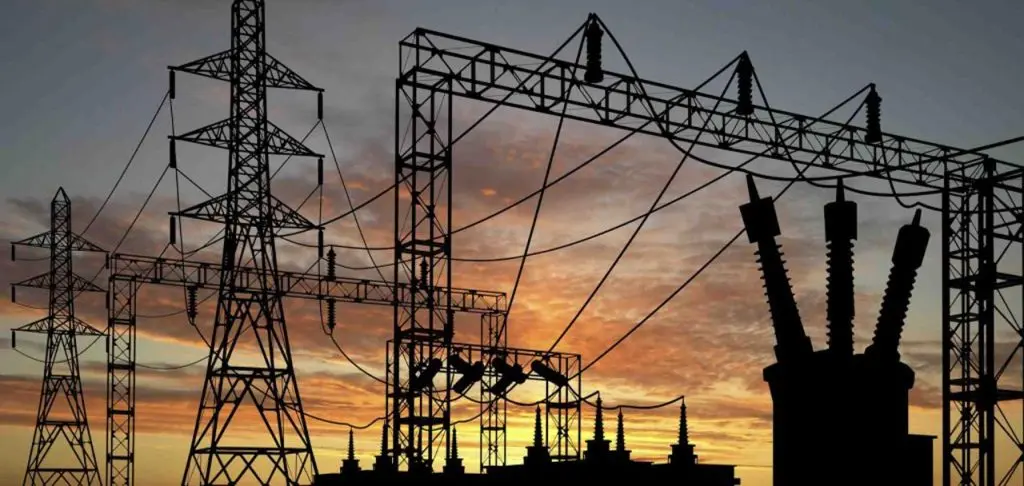
The Federal Government has unveiled an ambitious plan to secure $122.2 billion in investments over the next 21 years to diversify Nigeria’s energy sources, reduce dependence on the national grid, and enhance the stability and sustainability of the nation’s energy infrastructure.
This investment, planned between 2024 and 2045, aims to expand energy sources beyond the current hydropower and gas-fired thermal plants. The strategy includes incorporating hydrogen, solar photovoltaic technology, biomass, wind, gas projects combined with carbon capture, utilization, and storage technologies, nuclear power, concentrated solar power, and bioenergy.
This proposal was detailed in the newly released 2024 Nigeria Integrated Resource Plan and the National Integrated Electricity Policy. The documents indicate that $192 million will be allocated over five years, from 2024 to 2028, to boost transmission capacity nationwide.
The new policy documents, which are awaiting approval from the Federal Executive Council, aim to create a comprehensive framework for implementing the Electricity Act, addressing transitional challenges, integrating with other energy policies, and detailing renewable energy strategies.
Read Also:
- Seplat Energy Finalizes Acquisition of Mobil Nigeria from ExxonMobil
- FG Transfers Electricity Market Regulatory Oversight in Lagos to LASERC
- Government Plans to Revive Textile Industry and Combat Smuggling – Enoh
Currently, Nigeria’s electricity is primarily generated from gas-fired and hydroelectric power plants. About 80 percent of on-grid electricity comes from gas-fired plants, with the remainder predominantly from hydroelectric facilities. Despite an installed electricity generation capacity of approximately 13,000 megawatts, the actual available capacity is significantly lower, averaging about 4,200MW.
The gap between nominal capacity and actual supply is attributed to operational inefficiencies, maintenance issues, and gas supply constraints, mainly due to financial limitations. The new policy aims to promote the use of renewable energy sources to create a more environmentally sustainable energy mix for electricity generation in Nigeria.
The report highlights the government’s goal of providing a national grid that ensures security of supply and reduces the loss of load expectation, starting at 100 hours/year in 2024 and decreasing to 24 hours/year by 2035. It also specifies a requirement for spinning reserves to be set at 900MW.
According to the report, annual investment costs for the NIRP scenario to 2045 are expected to rise to $2 billion by 2030. From then on, they are projected to remain between $4 billion and $8 billion per year until 2040, eventually increasing to $14 billion-$15 billion in 2044 and 2045. By 2045, a total of $122 billion will be needed to diversify energy sources in the national grid.
A breakdown of the investment shows that the largest expenditure will be allocated to solar photovoltaic technology, with $56 billion, followed by hydroelectric power projects at $39 billion. Additionally, $16 billion will be dedicated to natural gas projects, $6 billion to gas projects with carbon capture, utilization, and storage technologies, and $3 billion to energy storage initiatives.
The plan aims to achieve a total installed capacity of 194 gigawatts by 2045, consisting of 111 gigawatts inclusive of storage and 83 gigawatts from renewable energy sources.
On improving the transmission network, the model includes minimal investment costs (around $1 billion), but this does not fully reflect the critical role of transmission in shaping cost-effective generation investments. The national transmission network remains heavily constrained by outdated equipment and a relatively high technical loss rate of seven to nine percent.
The report states that the network costs, totaling $192 million, will be incurred over five years from 2024 to 2028, when the projects are expected to be completed.
The National Integrated Electricity Policy document reveals that the targets for achieving universal electrification and phasing out self-generation by 2030 are no longer feasible and have been extended to 2035. This adjustment is due to challenges in the distribution sector, which has not progressed as much as the generation sub-sector.
Despite improvements in power generation, the distribution network continues to struggle, leading to a lack of creditworthiness. The report adds that delaying the goal by five years could result in an additional $29 billion in costs and an increase of 90 million metric tonnes of CO2 emissions.