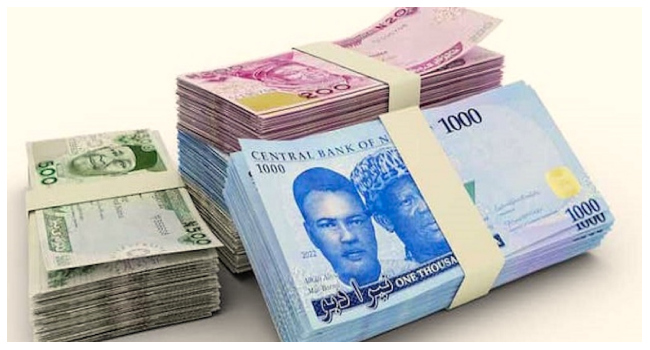

The naira depreciated to N1,355 per dollar in the foreign exchange market, extending recent losses amid declining external reserves and sustained demand pressures.
Data from the Central Bank of Nigeria shows the currency weakened from N1,348.1 per dollar recorded a day earlier.
Intraday trading data indicated that the naira fluctuated between N1,350 and N1,355.8 per dollar, with an average rate of N1,354.19. A total of 46 interbank deals were recorded during the session.
Read Also:
- Naira Weakens After Interest Rate Cut Announcement
- Naira Strengthens Against Euro, Closes at ₦1,606/€1
The latest movement continues a downward trend observed in recent trading sessions. A week earlier, the currency closed at N1,341.01 per dollar, indicating gradual but consistent depreciation.
External reserves declined to $48.48 billion from $48.54 billion earlier in the week. The reduction signals a weakening buffer for foreign exchange interventions aimed at stabilising the currency.
Market data points to persistent demand pressure in the foreign exchange market, with supply remaining constrained. The imbalance has continued to weigh on the naira despite policy efforts.
Global factors also contributed to the pressure. Increased geopolitical tensions supported demand for the U.S. dollar, strengthening the currency against emerging market peers.
Safe haven demand intensified amid stalled negotiations involving the United States and Iran. Concerns over potential disruptions in the Strait of Hormuz added to market uncertainty, supporting both crude oil prices and the dollar.
The dollar index remained elevated at 98.82 and was on track for a weekly gain of 0.58 per cent.
Other major currencies also weakened against the dollar, including the euro, British pound, and Japanese yen.
Emerging market currencies mirrored the trend, with declines recorded across several economies. The Philippine peso, Malaysian ringgit, and Indian rupee all posted losses during the period.
“The current trend reflects both external shocks and underlying supply constraints in the FX market,” a market analyst said.
The outlook for the naira remains tied to foreign exchange inflows, reserve levels, and global market conditions. Continued volatility is expected in the near term as demand pressures persist.



 By
By



 By
By