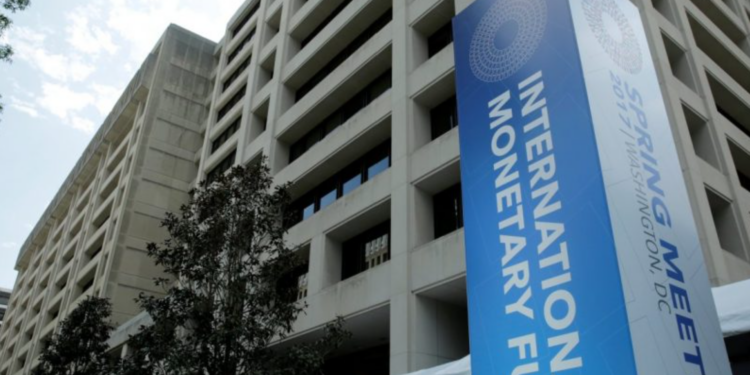

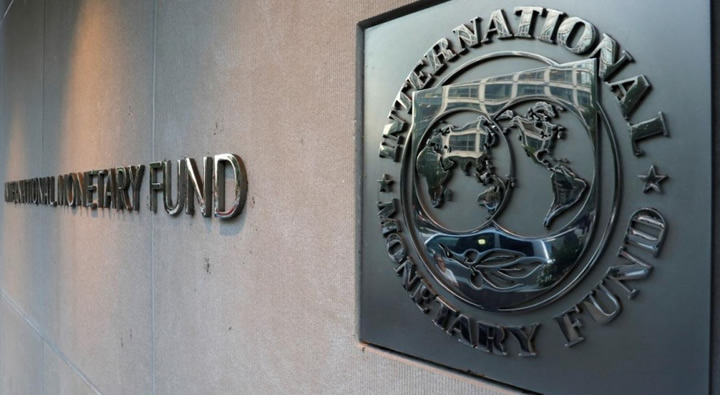
A new assessment by the International Monetary Fund has highlighted the deep economic shock that military coups continue to inflict across Sub-Saharan Africa, warning that unconstitutional changes of government significantly weaken investment, disrupt trade, and slow long-term growth.
The study, titled Political Fragility: The Economic Impact of Coups d’État, finds that countries experiencing coups suffer a sharp and sustained decline in economic performance, with investment emerging as the most heavily affected sector.
According to the analysis, gross fixed capital formation growth falls by an average of 14.3 percentage points following a coup. The IMF attributes this to heightened uncertainty, policy instability, and the withdrawal or hesitation of both domestic and foreign investors in politically unstable environments.
The report explains that coups tend to trigger a chain reaction of economic consequences, including geopolitical tension, sanctions from international and regional bodies, and weakened investor confidence. These factors combine to reduce capital inflows, particularly foreign direct investment, which many Sub-Saharan African economies depend on for infrastructure and industrial development.
Beyond investment, household consumption also takes a hit. The IMF estimates private consumption growth declines by about 2.3 percentage points after a coup, reflecting reduced purchasing power, uncertainty among households, and broader economic slowdown. Since consumer spending makes up a large share of economic activity in many African economies, the impact further drags down overall output.
Trade performance is similarly affected. Import growth drops by around 5.5 percentage points, while export growth falls by approximately 2.8 percentage points. The report notes that weakened domestic demand contributes to lower imports, while instability and disrupted production systems constrain export capacity.
On the broader growth outlook, the IMF finds that annual GDP growth declines by about 2.3 percentage points in the year a coup occurs. The effects do not fade quickly. Over a five-year period, cumulative economic output is reduced by roughly five percentage points, suggesting that the damage extends well beyond the immediate political crisis.
The report also underscores that Sub-Saharan African and low-income countries bear the greatest burden. Weak institutions, limited fiscal buffers, and reliance on external financing make these economies particularly vulnerable to shocks caused by abrupt political transitions.
Interestingly, the findings suggest that successful coups impose greater economic costs than failed attempts. The IMF also observes that sanctions imposed by regional and international actors tend to intensify the negative economic effects, further constraining growth and recovery.
“In many cases, coups d’état coincide with economic sanctions and this is indeed found to be an important transmission channel,” the report noted, pointing to the compounding effect of political isolation and economic restriction.
While the impact on investment, consumption, and trade is significant, the study finds limited immediate changes in certain fiscal and monetary indicators such as money supply, tax revenues, fiscal deficits, government spending, and private sector credit. However, the IMF cautions that data constraints in fragile and conflict-affected states may limit the precision of some of these findings.
Overall, the report concludes that military takeovers impose lasting economic costs that extend far beyond the political sphere, undermining development prospects and slowing progress in already vulnerable economies. It calls for deeper research into the broader relationship between political instability, conflict, and long-term economic fragility across developing regions.







 By
By


 By
By