Currencies
Naira stability, rising GDP spark hopes of poverty decline
By: Amarachi Okonkwo
Nigeria’s economy may be entering a recovery phase, with output growth now surpassing population expansion, a shift analysts say could lay the groundwork for sustained poverty reduction if maintained.
This is the central finding of a new report by Quartus Economics, which points to a strong rebound in 2025 following a challenging economic environment in 2024.
According to the report, Nigeria’s gross domestic product (GDP) in dollar terms rose sharply from $252.1 billion in 2024 to $307.5 billion in 2025, representing a 21.98 per cent increase. On a per capita basis, GDP climbed by 19.5 per cent to $1,295 from $1,083, despite continued population growth.
In local currency terms, nominal GDP expanded from N372.8 trillion to N441.5 trillion over the same period.
The analysis draws on data from the National Bureau of Statistics, exchange rate figures from the Central Bank of Nigeria, and comparative benchmarks from the International Monetary Fund.
Growth Finally Beating Demographics
A major highlight of the report is the reversal of a long-standing trend in which Nigeria’s population growth consistently outpaced economic expansion, limiting improvements in living standards.
In 2025, the country’s population grew by approximately 2.1 per cent, adding an estimated 4.8 million people. However, with GDP rising by nearly 22 per cent in dollar terms, average economic output per person increased significantly.
“For years, Nigeria struggled to grow its economy faster than its population,” the report noted. “That pattern has now reversed, creating a pathway for meaningful reductions in poverty.”
Between 2020 and 2023, Nigeria’s economy grew by less than 1 per cent cumulatively, while population expanded by over 10 per cent. By contrast, between 2024 and 2025, economic output grew by more than 8 per cent, compared to population growth of about 4.25 per cent.
Currency Stability Boosts Performance
The report attributes the improved economic performance to a combination of increased production and relative exchange rate stability.
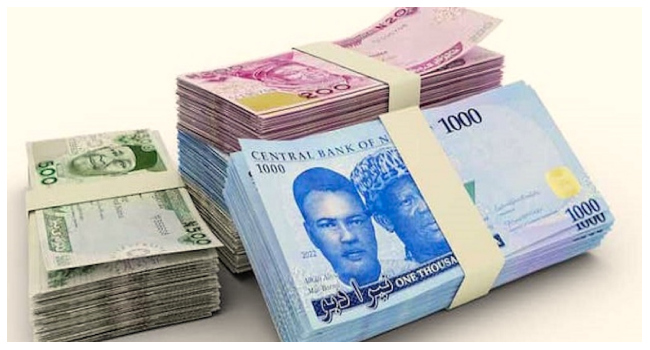
Nigeria’s nominal GDP growth of 18.43 per cent in naira terms was complemented by a modest appreciation of the currency. The naira strengthened by about 3 per cent on average, moving from N1,479 per dollar in 2024 to N1,436 in 2025.
This dual effect significantly boosted Nigeria’s GDP in dollar terms, a key metric for international comparisons.
Economists note that exchange rate stability plays a critical role in preserving household purchasing power, protecting real incomes, and supporting asset values — all of which are essential for improving welfare outcomes.
Outperforming Regional and Emerging Peers
Nigeria’s economic performance also compares favourably with its regional peers. Across Sub-Saharan Africa, GDP growth averaged 10.33 per cent in dollar terms and 7.66 per cent per capita, well below Nigeria’s figures.
Among major African economies, only Ghana recorded stronger growth, with GDP expanding by 37.7 per cent. Nigeria outpaced countries such as South Africa, Egypt, Algeria, Kenya, and Morocco in both overall and per capita terms.
Globally, Nigeria’s growth exceeded that of several emerging markets, including Bangladesh, Indonesia, Thailand, and Mexico.
Cautious Optimism Amid Persistent Challenges
Despite the positive trajectory, the report cautions that poverty levels remain high and that Nigeria’s per capita income still trails historical peaks and many peer economies.
However, it identifies “modest but clear signs of progress,” driven by three key factors: improved currency stability, rising economic output, and a better alignment between population growth and GDP expansion.
“Prosperity is not determined by fiat,” the report stated, emphasising that sustained gains will depend on continued macroeconomic stability and expansion in productive sectors.
Currency stability, in particular, was highlighted as a crucial enabler. In previous years, sharp devaluations eroded incomes and deepened poverty. The recent steadiness of the naira, the report argues, provides a more supportive environment for wealth creation and improved living standards.
However, analysts say the coming years will be critical in determining whether Nigeria can consolidate these gains and translate macroeconomic improvements into tangible reductions in poverty.
While challenges remain, the report concludes that there is “clear evidence” Nigeria’s economic fortunes are improving with the potential for a more inclusive growth cycle if current trends are sustained.