Business Briefings
$3bn livestock push targets Nigeria’s pastoral transformation
By: Amarachi Okonkwo
Nigeria’s livestock industry could unlock up to $3bn in pastoral market opportunities over the next three to five years, as government and private sector stakeholders intensify efforts to overhaul one of the country’s most structurally constrained economic sectors.
The renewed investment momentum was the focus of a three-day high-level forum in Abuja, where producers, processors, financiers and policymakers convened to negotiate deals, establish supply agreements and rebuild trust across a fragmented livestock value chain.
The forum, organised by the African Union Inter-African Bureau for Animal Resources (AU-IBAR) through its Africa Pastoral Markets Development Platform (APMD), forms part of a four-year programme supported by the Gates Foundation aimed at transforming pastoral economies into more market-driven, inclusive and resilient systems.
Huge livestock base, persistent inefficiencies
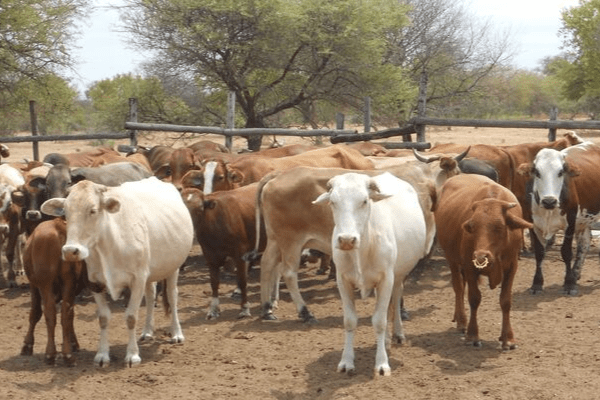
Speaking at the event, the Director of Livestock Extension and Business Development at the Federal Ministry of Livestock Development, Shekamang Ayuba, said Nigeria remains a continental heavyweight in livestock production, with an estimated 54 million cattle and 250 million poultry birds.
Read Also:
NDPC Opens Probe into Remita, Sterling Bank
Zenith Bank Plc enters Francophone market with Côte d’Ivoire launch
He noted that the sector supports the livelihoods of about 75 million households and contributes roughly 5 per cent to GDP, valued at around $32bn. However, he warned that structural inefficiencies continue to limit its economic impact, particularly in dairy production.
According to him, Nigeria still imports about 60 per cent of its dairy needs, reflecting deep productivity gaps across the value chain. “Milk yields from local cattle are less than 10 per cent of global averages, while feed costs account for 60 to 70 per cent of total production expenses, exposing producers to severe price volatility,” he said.
Reform frameworks and investment pipeline
Ayuba said the government is attempting to close these gaps through policy reforms and targeted investment programmes, including the National Livestock Master Plan, developed with support from the International Livestock Research Institute and the Gates Foundation.
He also highlighted the National Livestock Growth Acceleration Strategy, which aims to expand the sector into a $74bn–$90bn industry by 2035 through coordinated participation by state governments, private investors and development partners.
In addition, the $500m World Bank-supported Livestock Productivity and Resilience Support Project (L-PRES), launched in 2022, is currently being implemented across 20 states. The programme is expected to benefit about 1.43 million people, with at least 30 per cent women participation.
“Government alone cannot transform Nigeria’s livestock sector. The future depends on bold, private sector-led investment across feed production, processing and market linkages,” Ayuba said.
Deal-focused platform to unlock financing
Private Sector Engagement Expert at AU-IBAR, Mohammed Eidie, said the Abuja forum was deliberately structured to move beyond policy discussions into actual business transactions.
He explained that the APMD Platform is facilitating business-to-business matchmaking between pastoral producers, feedlot operators, off-takers and financial institutions to generate bankable deals.
“We are building the infrastructure of trust that allows the sector to function—contracts, partnerships and supply agreements that translate into real investments,” he said.
Eidie added that the platform operates across three pillars: strengthening private sector participation, improving policy environments and building data systems to support investment decisions, while integrating gender inclusion, youth employment, nutrition and climate resilience.
Private sector calls for stronger market infrastructure
The Policy Pillar Lead of APMD, Prof. Ahmed Elbeltagy, said the initiative is designed to strengthen Nigeria’s competitiveness in regional and global livestock markets.
“The livestock sector holds immense potential. Private sector-driven transformation will enhance competitiveness, strengthen food security and reduce poverty,” he said.
However, industry operators warned that significant structural bottlenecks continue to discourage investment.
Abattoirs face infrastructure and financing constraints
Managing Director of ABAT CBD Limited, Raymond Odulate, said licensed abattoirs remain critical to linking pastoral producers with urban markets but are severely constrained by infrastructure deficits.
He cited unreliable electricity and water supply as major challenges, forcing operators to rely on expensive diesel generators that disrupt cold chain systems required for hygienic meat processing.
Odulate also raised concerns about the dominance of informal slaughter facilities, which often evade regulatory and health standards, creating unfair competition.
“You have a situation where regulated quality becomes more expensive than unregulated products, and that distorts the entire market,” he said.
He further noted that high interest rates often above 25 per cent—make it nearly impossible for operators to finance modern infrastructure such as automated slaughter lines, cold storage systems and waste-to-energy facilities.
“No serious modernisation can happen under current financing conditions,” he added.
Call for investment-ready reforms
Operations Manager at SCL Future Food Systems, Evangeline Yusuf, said the sector is at a critical turning point and requires reforms that create clear, incentive-based frameworks for capital inflows.
She emphasised that licensed abattoirs must be repositioned as investment-ready hubs to unlock the wider livestock economy and strengthen pastoral market systems.