Opinion
Obasanjo: Nigeria’s refineries will never work again
By: Amarachi Okonkwo
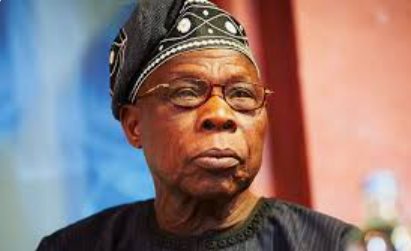
Former President Olusegun Obasanjo has renewed his long-standing criticism of Nigeria’s state-owned refineries, declaring that they “will never work” as the Nigerian National Petroleum Company Limited (NNPC Ltd.) intensifies efforts to secure technical partners for the facilities.
Speaking during a televised interview on Sony Irabor Live on Saturday, Obasanjo argued that decades of poor maintenance, suboptimal scale, corruption, and structural inefficiencies have rendered the Port Harcourt, Warri, and Kaduna refineries commercially unviable.
He reiterated that public-private partnerships (PPPs) remain the only sustainable model for managing large-scale energy infrastructure in Nigeria, citing the success of the Nigeria LNG Limited as a benchmark. According to him, the LNG company has thrived because of its ownership structure, where private investors hold a majority stake, ensuring efficiency and accountability.
Obasanjo revealed that during his presidency, he made multiple attempts to привлечe global oil major Shell to operate the country’s refineries. However, the firm declined, citing limited profitability in downstream operations, the relatively small capacity of Nigeria’s refineries compared to global standards, poor maintenance culture, and pervasive corruption.
He explained that Shell officials told him their profits were largely derived from upstream activities, while downstream refining was more of a service segment with thinner margins. They also reportedly flagged that Nigeria’s refinery capacities ranging between 60,000 and 100,000 barrels per day fell significantly short of the global benchmark of 250,000 to 300,000 barrels per day.
Read Also:
- nesg-nigeria-must-turn-reforms-into-real-growth-now
- ecobank-alumni-deepen-ties-with-bank-launch-expanded-welfare-schemes
The former president said a breakthrough appeared imminent when industrialist Aliko Dangote offered $750m for a 51 per cent stake in two of the refineries. The deal was concluded during his administration but was later reversed by his successor, Umaru Musa Yar’Adua, following pressure from the NNPC.
Obasanjo described the reversal as a missed opportunity, arguing that the refineries have since deteriorated further despite significant public expenditure. He claimed that approximately $16bn has been spent on rehabilitation efforts over the years—an amount he noted is close to the cost of building the privately owned Dangote Refinery, now regarded as Africa’s largest.
His comments come at a critical time as NNPC Ltd. moves to conclude the selection of technical partners for the refineries by June 2026. The company’s Group Chief Executive Officer, Bayo Ojulari, recently acknowledged that despite rehabilitation efforts and brief reopenings in 2024, the Port Harcourt and Warri plants were operating well below international standards and struggling to compete commercially—particularly against the Dangote refinery.
Dangote himself has previously maintained that the government-owned refineries may never regain operational viability, noting that his decision to build a private refinery was influenced in part by the reversal of the earlier acquisition deal.
As of the time of filing this report, NNPC Ltd. had not issued an official response to Obasanjo’s latest remarks.
The ongoing debate underscores broader concerns about the future of Nigeria’s refining sector, where state-led models have repeatedly faltered, while private-sector-driven initiatives appear to be gaining ground.