
By: Amarachi Okonkwo
The Nigerian Maritime Administration and Safety Agency (NIMASA) is poised to commence the long-awaited disbursement of the Cabotage Vessel Financing Fund (CVFF) following presidential approval, in a move expected to significantly boost indigenous shipping capacity and create thousands of jobs within the maritime sector.
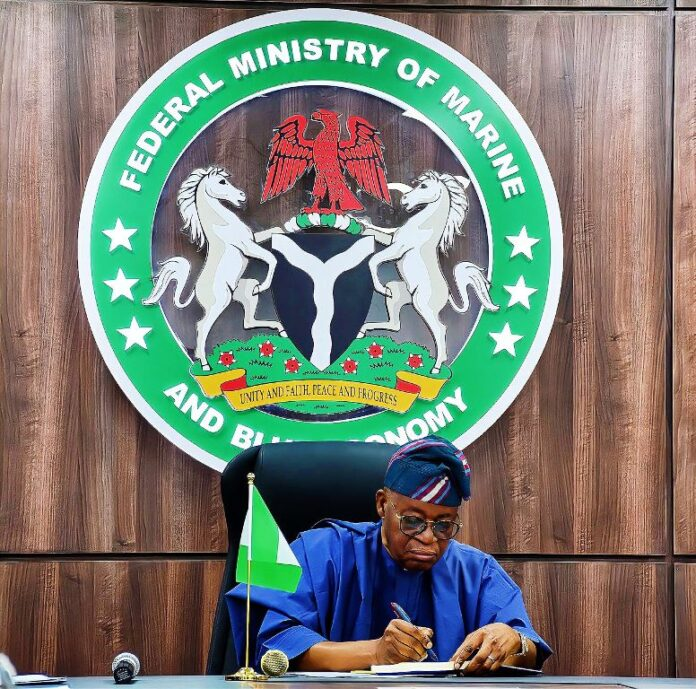
The Minister of Marine and Blue Economy, Adegboyega Oyetola, made this known on Thursday during the commissioning of the NIMASA University of Lagos Institute of Maritime Studies building at the University of Lagos.
According to the minister, President Bola Tinubu has approved the commencement of the fund’s disbursement, bringing renewed hope to indigenous shipowners who have awaited access to the intervention fund for years.
Read Also:
- cbn-reforms-shield-nigeria-from-global-shocks-despite-inflation-rise/
- dollar-rises-on-us-iran-tensions-as-naira-faces-mild-pressure
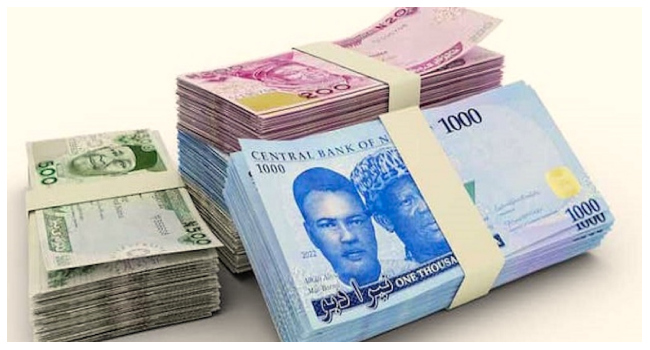
It would be recalled that NIMASA, on January 22, 2026, opened its application portal for the $25 million CVFF, inviting eligible indigenous shipowners to submit applications. Industry sources indicate that about 60 applicants have so far expressed interest through the portal.
Oyetola expressed optimism that the release of the fund would strengthen local participation in Nigeria’s coastal shipping business and stimulate employment across the maritime value chain.
He said the intervention is projected to create up to 30,000 jobs while enhancing the capacity of Nigerian-owned vessels to compete effectively in domestic shipping operations.
Despite the minister’s assurances, some stakeholders in the maritime industry have reacted cautiously, citing past unfulfilled promises surrounding the fund’s release.
Industry players recalled that a similar assurance had previously been given by the former Minister of Transportation, Mu’azu Jaji Sambo, who had claimed that the administration of former President Muhammadu Buhari approved the disbursement before leaving office.
However, the promised release did not materialise.
A shipowner based in Apapa, who spoke on the development, expressed scepticism over the latest announcement.
“Until he left office, the disbursement remained only in the fertile imagination of Minister Mu’azu. We hope Oyetola’s assurance will not go through the same route,” the shipowner said.
Meanwhile, beyond the financing fund, the minister used the occasion to reaffirm the Federal Government’s commitment to deepening investments in Nigeria’s marine and blue economy through strategic infrastructure development and human capital expansion.
The newly commissioned NIMASA UNILAG Institute of Maritime Studies building, donated by the agency, is equipped with modern lecture rooms, laboratories, and specialised research facilities designed to support teaching, research, and innovation in the maritime sector.
Describing the project as a major milestone, Oyetola said it reflects the government’s determination to strengthen institutional capacity and position the blue economy as a major driver of national economic growth and prosperity.
“The future of the blue economy will be shaped not just by natural endowments, but by the quality of minds we nurture within institutions such as this,” the minister said.
He further emphasised the strategic importance of the maritime sector, noting that over 90 per cent of Nigeria’s trade is conducted through maritime channels.
According to him, the sector remains central to the country’s economic diversification agenda, job creation efforts, and sustainable development goals.
Highlighting ongoing efforts to develop manpower for the industry, Oyetola disclosed that 2,459 Nigerians have so far been sponsored under the Nigerian Seafarers Development Programme for training in maritime institutions across the United Kingdom, Egypt, the Philippines, India, and Romania.
He added that 1,088 beneficiaries have successfully obtained their Certificates of Competency, strengthening the country’s pool of qualified maritime professionals.
The minister also pointed to opportunities within fisheries and aquaculture, noting that Nigeria’s annual fish demand of 3.6 million metric tonnes presents enormous potential for food security, investment, and employment generation.

 By
By



 By
By