Editorials
Tinubu’s Deals and Nigeria’s Search for Economic Leverage

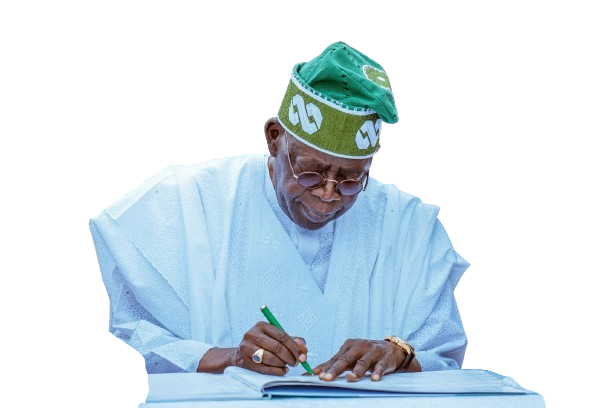
President Bola Ahmed Tinubu’s recent wave of international engagements and investment discussions reflects a deliberate push to reposition Nigeria as an attractive destination for global capital. At a time when fiscal pressures remain high, the administration’s emphasis on bilateral deals, trade partnerships, and foreign direct investment inflows signals a clear recognition: Nigeria’s economic recovery cannot be domestically financed alone.
But beneath the optimism surrounding these engagements lies a more complex question—what exactly do these deals deliver, and how quickly do they translate into real economic relief for ordinary Nigerians?
On paper, the strategy is straightforward. Nigeria offers scale: a large population, expanding consumer markets, and abundant natural and human resources. In return, the government seeks infrastructure financing, industrial expansion, energy investments, and technology transfer. In practice, however, the outcomes of such agreements often take time to materialise, while the domestic economy continues to face immediate pressures such as inflation, currency volatility, and rising living costs.
The Tinubu administration has been particularly active in courting investors across Europe, the Middle East, and Asia, projecting a reform-driven agenda anchored on subsidy removal, exchange rate unification, and attempts to stabilise fiscal policy. These reforms were intended to restore investor confidence and reduce distortions that have long plagued the Nigerian economy. Yet, reforms alone do not guarantee capital inflows; execution, transparency, and policy consistency matter just as much.
Read Also:


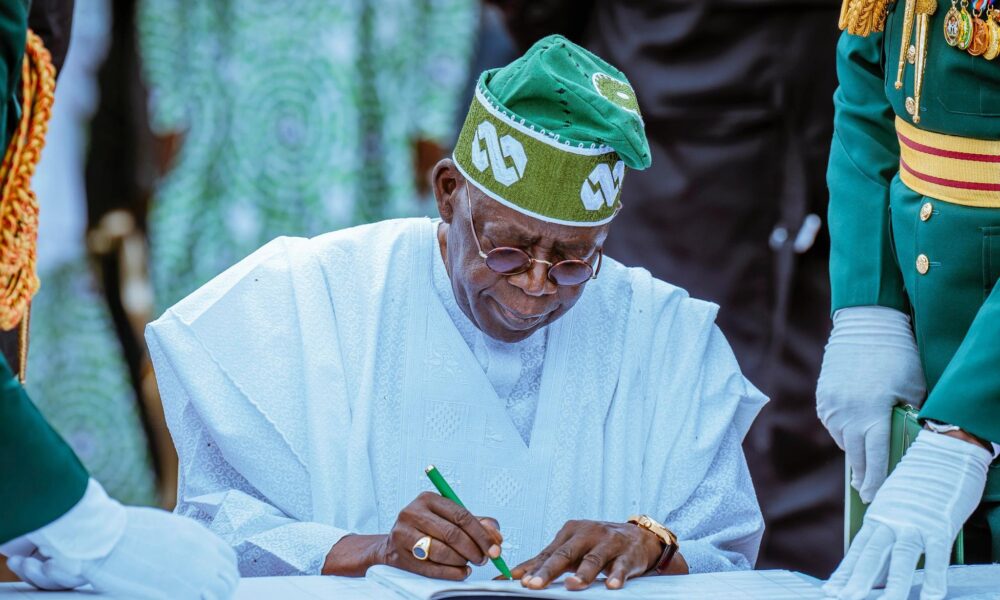


Critically, Nigeria’s deal-making approach must move beyond announcements and memoranda of understanding. The country has, over the years, accumulated a history of ambitious agreements that fade into silence after initial headlines. This pattern has weakened public trust and created skepticism around the real value of high-level economic diplomacy.
For Tinubu’s economic strategy to yield tangible dividends, the focus must shift from deal acquisition to deal implementation. This means ensuring that agreements are structured with clear timelines, measurable deliverables, and enforceable commitments from both sides. Infrastructure financing deals, for instance, should be tied to project milestones that can be independently verified, while investment partnerships should include domestic value-addition requirements to prevent capital flight without local impact.
Equally important is the domestic enabling environment. Foreign investors are not only influenced by international negotiations but by what they observe on the ground. Issues such as regulatory unpredictability, port inefficiencies, energy shortages, and insecurity remain key constraints. Without addressing these structural bottlenecks, even the most well-negotiated foreign deals risk underperforming.
There is also a political dimension that cannot be ignored. Large-scale international agreements often serve as signals of economic competence to global markets. However, domestically, citizens are more concerned with immediate economic relief—jobs, stable prices, and improved purchasing power. This creates a tension between external perception and internal reality. Managing this gap requires not just diplomacy, but communication that is honest about timelines and expectations.
Ultimately, the success of Tinubu’s deal-driven economic diplomacy will not be measured by the number of agreements signed, but by their visible impact on Nigeria’s productive capacity. Do they create jobs? Do they improve infrastructure? Do they strengthen local industries? These are the benchmarks that matter.
Nigeria stands at a critical economic juncture. The opportunity for reinvention is real, but so is the risk of repetition—of big promises without structural transformation. If the Tinubu administration can convert its diplomatic momentum into measurable domestic outcomes, it may yet redefine Nigeria’s economic trajectory. If not, the country risks once again mistaking motion for progress.