Business Briefings
Senate to Engage IMF Officials on Nigeria’s Economic Outlook

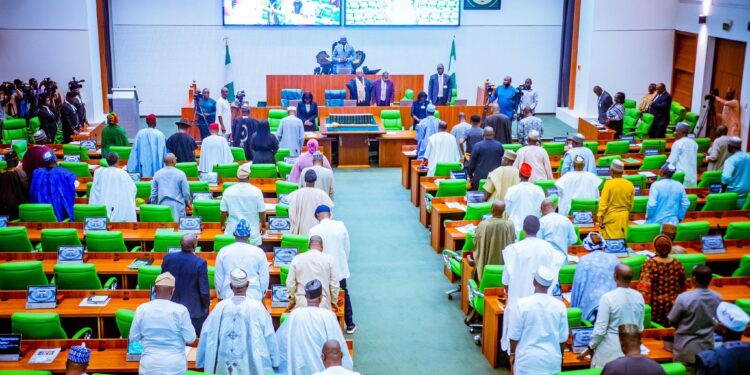
The leadership of the Nigerian Senate is expected to meet with officials of the International Monetary Fund (IMF) to discuss Nigeria’s economic outlook and ongoing reform programmes under the administration of Bola Ahmed Tinubu.
The engagement forms part of the IMF’s Article IV Consultation with Nigeria, a routine assessment of the country’s economic policies, fiscal direction, and financial stability.
The meeting is expected to provide lawmakers with insights into the Federal Government’s economic management framework and allow discussions on potential support the international financial institution could provide for ongoing economic reforms.
The planned interaction was disclosed by the Deputy President of the Senate, Barau Jibrin, who noted that the consultation exercise runs from March 4 to March 17.
During the period, the IMF delegation is expected to hold consultations with key government institutions across the country as part of its policy review process.
Read Also:
- Nigeria loses 50% of food produced in Lagos– Stakeholders push for large-scale farming
- Nigerian Fintech Sector Expanded by 70% in 2025 – CBN
According to a notice issued to lawmakers, the IMF specifically requested a high-level engagement with the Senate leadership as part of the consultation programme.
The notice stated that the Federal Office of Finance informed the Senate leadership that the IMF Article IV Consultation in Nigeria had been scheduled for the period and would involve meetings with major government stakeholders.
The meeting with lawmakers is expected to serve as a platform for dialogue between the Senate and IMF officials on Nigeria’s economic direction and policy reforms.
Recent assessments by global financial institutions indicate that Nigeria’s economic outlook is gradually improving, although key structural challenges remain.
The IMF projected Nigeria’s economy to grow by about 3.4 per cent, reflecting modest improvement as economic activity strengthens, particularly in non-oil sectors.
However, analysts noted that the outlook remains constrained by persistent inflationary pressures, fiscal challenges, and structural bottlenecks in areas such as energy supply and infrastructure development.
The World Bank also projected average economic growth of about 3.6 per cent between 2025 and 2026, citing reforms such as fuel subsidy removal, exchange-rate unification, and tighter monetary policy as factors supporting economic stability and improved investor confidence.
Economic growth during the period has been largely driven by services, especially telecommunications and financial services.
Looking ahead, global institutions have expressed stronger optimism regarding Nigeria’s medium-term outlook.
The IMF revised Nigeria’s growth forecast upward to about 4.4 per cent in 2026, reflecting expectations that fiscal and monetary reforms would strengthen macroeconomic stability and improve productivity.
Similarly, the World Bank projected that Nigeria’s economy could expand by around 4.4 per cent in 2026 and 2027.
Analysts said the projected expansion could represent one of the fastest growth periods for the country in more than a decade if reform momentum is sustained.
Growth is expected to be supported by the services sector, agriculture, and other non-oil industries as the country intensifies efforts to diversify its economy.