Business Briefings
Power Crisis Looms as Gas Suppliers Halt Supply Over N3.3tn Debt

By: Amarachi Okonkwo
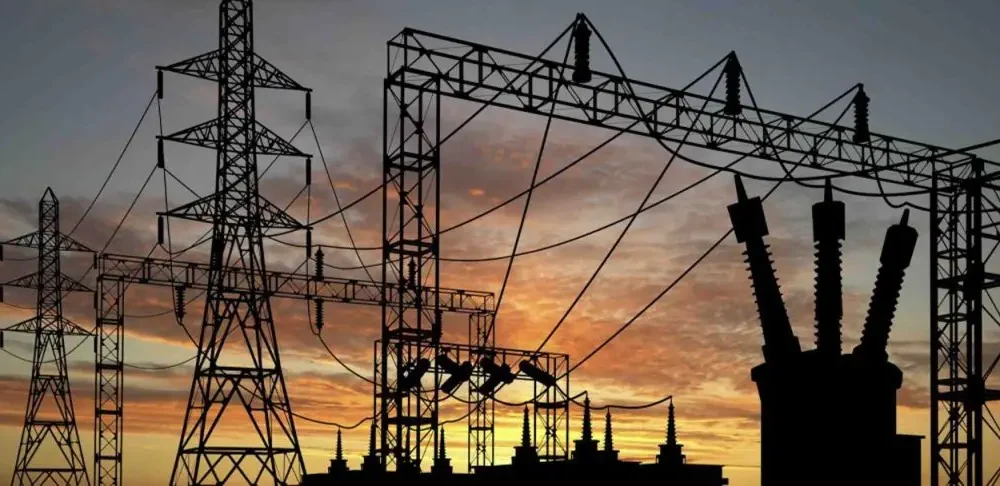
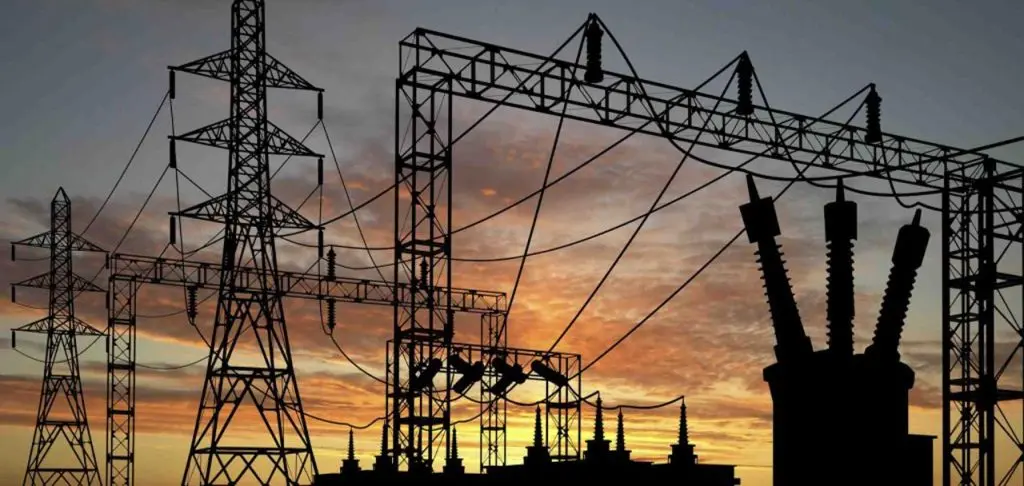
Millions of Nigerians could face deeper electricity shortages as gas suppliers threaten to stop supplying thermal power plants over mounting debts estimated at N3.3tn, according to power generation companies.
The Chief Executive Officer of the Association of Power Generation Companies, Dr Joy Ogaji, disclosed this during an interview on Fresh FM, warning that mounting debts across the power value chain are pushing the sector toward a major crisis.
Her warning comes amid worsening electricity supply across the country, with many Nigerians experiencing prolonged blackouts since the beginning of the year.
Read Also:
- FG’s N501 Billion Power Sector Bond Records Full Subscription
- FG Pushes Local Manufacturing of Power Equipment to Reduce Imports
Data from the Nigerian Independent System Operator showed that power generation dropped below 4,000 megawatts in recent weeks, largely due to gas constraints affecting thermal power plants. As of Tuesday, the 11 power distribution companies were sharing only 3,053MW, making reliable electricity supply across their franchise areas virtually impossible.
Electricity consumers across different supply bands have continued to lament the situation, especially as outages persist amid rising fuel prices and intense heat.
Operational data from NISO illustrates the scale of the shortfall. Thermal power plants require an estimated 1,629.75 million standard cubic feet of gas per day to operate at optimal capacity. However, as of February 23, 2026, actual supply stood at about 692.00 mmscf per day, representing less than 43 per cent of the required volume.
As gas supply declines, several power plants have shut down while the Transmission Company of Nigeria resorts to load shedding, rationing the limited electricity available among distribution companies. DisCos have repeatedly attributed outages to gas shortages.
Ogaji explained that the crisis stems largely from the failure of the Nigerian Bulk Electricity Trading Plc (NBET) to fully pay generation companies for electricity supplied since the sector’s privatisation.
According to her, the Federal Government currently owes GenCos about N6.8tn, with roughly 70 per cent of the amount linked to thermal power plants that depend on gas.
She noted that about 70 per cent of payments owed to gas-fired power plants belongs to gas suppliers, meaning gas producers are owed approximately N3.3tn out of the N4.76tn tied to thermal generation.
“NBET was set up to buy power from GenCos and sell to DisCos with the expectation that payments would be made in full. However, since 2013, they have never paid fully, and the debt has now risen to N6.8tn,” she said.
Providing a breakdown of the liabilities, Ogaji said the debt has grown steadily over time.
According to her, the debt rose to N4tn between 2015 and December 2024, while monthly shortfalls of about N200bn in 2025 added roughly N2.4tn, bringing the total to about N6.4tn by the end of last year.
The figure has continued to increase in 2026.
“We are already in March 2026. The debt rose to N6.6tn in January and N6.8tn in February. By the end of March, another N200bn will be added, pushing the total to about N7tn,” she said.
Ogaji warned that the liquidity crisis is directly responsible for the worsening electricity shortages.
“Yes, it is 120 per cent correct to say that the debt is the reason why we are in darkness,” she said.
According to her, gas producers are now insisting on payment before supplying fuel to power plants.
“Gas suppliers have told us clearly that if we need gas, we must put money on the ground. We owe them a lot of money,” she said.
The GenCo chief added that generation companies are also struggling to service bank loans obtained during the 2013 power sector privatisation, further worsening their financial strain.
She noted that most of the loans were obtained in dollars when the exchange rate was about N155 to the dollar, compared with about N1,400 per dollar today.
“Even if the government pays the N6.8tn today, it may still not be enough for GenCos to settle debts owed to gas suppliers, banks, and meet operational maintenance costs,” she said.
With thermal plants accounting for roughly 70 per cent of electricity generation on the national grid, stakeholders warn that any prolonged disruption in gas supply could significantly reduce power generation capacity and worsen outages across homes and businesses.
Meanwhile, the Minister of Power, Adebayo Adelabu, said the Federal Government is addressing the situation.
Speaking through his media aide, Bolaji Tunji, the minister said the issue is being handled in collaboration with the Minister of State for Petroleum (Gas), Ekperikpe Ekpo.
“It is being handled jointly with the Minister of State for Petroleum (Gas),” Tunji said in a brief message.
Despite the mounting debts, gas companies supplied 179.79 billion standard cubic feet of gas to power firms between January and July 2025, valued at about N607bn.
However, industry stakeholders say the persistent liquidity crisis continues to undermine Nigeria’s power sector, even though the country holds over 200 trillion cubic feet of proven gas reserves.
Speaking in Lagos, the Chairman of Geometric Power and former Minister of Power, Barth Nnaji, described the situation as a national contradiction.
“It’s quite perplexing. We are a gas-rich country, yet we struggle to supply enough gas to our power plants,” he said.
Nnaji also noted that while the official domestic gas price for power generation was previously pegged at $2.42/MMBtu, regulators revised it downward to $2.13/MMBtu effective April 1, 2025.
However, generation companies often source gas from the open market at about $2.70 or higher, depending on supply constraints and contractual arrangements.
He warned that the pricing disparity is worsening liquidity challenges in the sector and contributing to the growing electricity subsidy burden.