
Business Briefings
FAAN Cashless Access Policy Causes Gridlock at Lagos, Abuja Airports

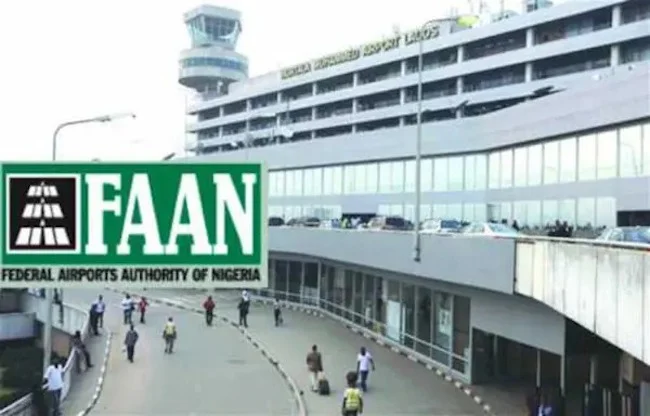
The introduction of a cashless access payment system by the Federal Airports Authority of Nigeria triggered heavy congestion at airports in Lagos and Abuja, leaving many travellers stranded and forcing some to miss scheduled flights.
Motorists attempting to enter airport premises on Sunday faced long queues as they struggled to comply with the newly enforced electronic payment process at entry gates.
Several passengers described chaotic scenes, with some abandoning their vehicles at the entrance and hurrying on foot to catch departing flights, while others spent hours trying unsuccessfully to complete transactions.
Read Also:
- Nigeria’s Inflation Slows to 15.15% in December 2025 — NBS
- FG approves digitisation of fish import licences
At the Murtala Muhammed International Airport, travellers complained that the rollout exposed poor operational preparation for the transition to digital payments.
One frequent flyer said the reform itself was welcome but its implementation ignored the time-sensitive nature of air travel. He noted that he had to leave his vehicle at the gate with relatives in order to board his flight on time.
Another passenger described the situation as confusing, saying many motorists did not understand the payment procedure and received limited assistance from officials.
The authority had earlier announced plans to migrate all payments at its facilities — including access tolls, parking, lounges, and protocol services — to electronic platforms to improve transparency and block revenue leakages.
However, full enforcement only began recently, making Sunday the first day of strict compliance across the affected airports.
Under the system, airport users must obtain a dedicated FAAN payment card, which is registered, funded, and scanned at entry points. Travellers who attempted to use bank cards or point-of-sale terminals reported slow processing and repeated transaction failures, further worsening congestion.
FAAN’s spokesperson attributed the disruption to last-minute compliance by airport users, explaining that many motorists attempted to obtain cards only upon arrival. He said registration points had been provided near the entrances, but on-the-spot enrolment significantly slowed traffic flow.
According to the agency, the cashless system is designed to curb corruption, improve accountability, and align airport revenue collection with global digital standards.
Officials from the Nigerian Civil Aviation Authority expressed confidence that the situation would improve once travellers obtain cards ahead of time and become familiar with the process.
The incident highlights the operational risks of introducing new digital systems in high-traffic transport hubs, where even minor delays can quickly escalate into widespread disruption.