Business Briefings
Dangote Refinery Signs Petrol Distribution Deal
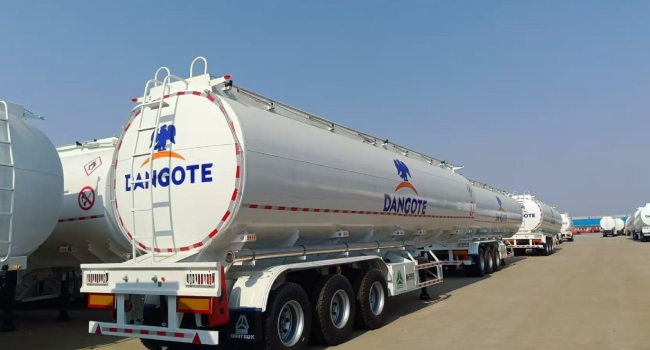
Africa’s largest refinery, owned by the Dangote Group, has entered into an agreement with 12 major marketers to distribute between 60 million and 65 million litres of petrol daily across Nigeria.
Group President Aliko Dangote disclosed that the structured offtake framework will prioritise domestic supply while allowing surplus production for export.
According to him, the arrangement is expected to stabilise fuel availability nationwide and strengthen Nigeria’s path toward energy self-sufficiency. Any excess output, estimated at 15–20 million litres per day, will be exported after local needs are met.
Read Also:
- Otedola Says Dangote Refinery Expansion Could Strengthen the Naira
- NNPC Issues Warning of Possible Power Shortfall as Seplat Schedules Gas Plant Maintenance
The refinery’s daily supply target aligns with Nigeria’s current consumption level, which fluctuates between 50 million and 60 million litres. At this rate, monthly domestic supply could exceed two billion litres.
The distribution framework builds on earlier agreements reached with downstream operators aimed at reducing supply disruptions and volatility in pump prices.
Under the plan, marketers including MRS Oil Nigeria, NNPCL Retail, Ardova, Conoil, TotalEnergies Marketing Nigeria, and others will handle nationwide distribution to ensure consistent availability and prevent hoarding or speculative practices.
The refinery noted that the model is designed to improve logistics efficiency, support price stability, conserve foreign exchange, and strengthen Nigeria’s trade balance by reducing dependence on imported fuel.
The Group Chief Executive Officer of the Nigerian National Petroleum Company Limited, Bayo Bashir Ojulari, recently described the refinery as a transformative national asset capable of reshaping the country’s energy security framework.
With capacity projected at 650,000 barrels per day, the facility is expected to play a central role in ending decades of fuel import dependence and positioning Nigeria as a regional exporter of refined petroleum products.