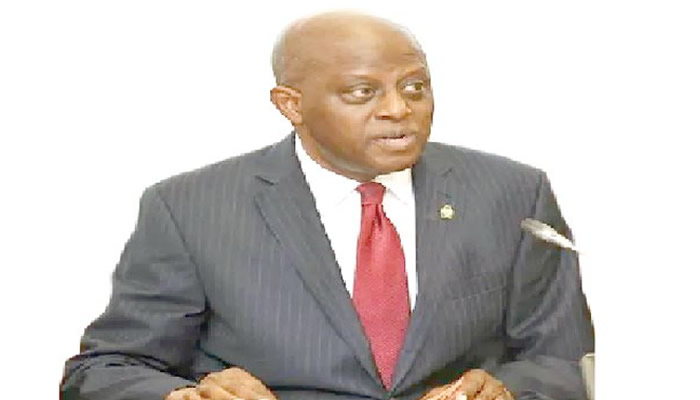

The Governor of the Central Bank of Nigeria (CBN), Olayemi Cardoso, has underscored Nigeria’s central role in Africa’s journey toward a single currency.
In a statement from Abuja on Monday, Cardoso highlighted that Nigeria’s hosting of the African Monetary Institute (AMI)—and eventually the African Central Bank (ACB)—positions the country at the forefront of Africa’s monetary integration and strengthens its influence over the continent’s emerging currency framework.
Related News:
- Cardoso Credits Tight Monetary Policy for 10-Point Inflation Drop
- CBN Seeks Long-Term Capital to Sustain Financial Sector Reforms
The 39th Ordinary Session of the African Union (AU) Assembly recently confirmed Nigeria as a permanent member of the AMI Board. The AMI, created under the AU’s financial institutions program, is the precursor to the ACB, which will be headquartered in Abuja.
Cardoso described Nigeria’s hosting of the AMI and the upcoming ACB as a landmark achievement for the nation and the continent. He said it establishes Nigeria as a hub for Africa’s monetary integration and enhances its input in shaping the design of a single continental currency.
“This historic decision marks a key step in Africa’s financial integration and highlights Nigeria’s strategic contribution to shaping the continent’s evolving financial architecture,” he said.
He added that the move advances macroeconomic convergence, stronger monetary collaboration, and Africa’s vision for financial sovereignty and economic unity.
The CBN governor noted that AU Heads of State reaffirmed Nigeria’s representation on the AMI Board during the summit, a position that will remain throughout the transitional period leading to the formal establishment of the ACB.
He also credited the CBN and the Ministries of Foreign Affairs, Justice, and Finance for their role in securing the milestone.
“Over the years, the Bank has led technical efforts that shaped the Draft AMI Statute, approved at the 5th Extraordinary Meeting of the Specialised Technical Committee on Finance in Abuja. It also provided hosting facilities and logistical support for the AMI’s launch,” Cardoso explained.
This development represents another step in Africa’s pursuit of a unified currency. In 2024, President Bola Tinubu reaffirmed Nigeria’s readiness to host the African Central Bank under the provisions of the Abuja Treaty.
The Abuja Treaty, formally the Treaty Establishing the African Economic Community, was adopted on June 3, 1991, and entered into force on May 12, 1994. It set the stage for deeper economic integration, including the eventual creation of a single African currency.
The proposed ACB is expected to coordinate a common monetary policy and issue a single African currency. Its objectives include promoting international monetary cooperation, ensuring exchange rate stability, enabling a multilateral payments system among member states, and removing foreign exchange barriers that limit trade.


 By
By




 By
By