Opinion
Regulatory Fragmentation Threatens African Energy Investment – NUPRC Chief

The Chief Executive of the Nigerian Upstream Petroleum Regulatory Commission (NUPRC), Oritsemeyiwa Eyesan, has cautioned that inconsistent regulatory frameworks across Africa remain a major barrier to cross-border energy investments. She called for stronger collaboration through the African Petroleum Regulators’ Forum (AFRIPERF) to harmonise policies and create a unified regulatory voice across the continent.
Delivering a keynote address at the Nigerian International Energy Summit in Abuja, Eyesan—represented by NUPRC Director Edu Inyang—stressed that Africa’s challenge is not resource scarcity but regulatory fragmentation, which raises costs, delays projects, and discourages investors. “Investors are not deterred by Africa’s geology; they are deterred by inconsistent rules,” she said.
She explained that AFRIPERF was established to drive regulatory convergence, improve predictability, and accelerate cross-border oil and gas projects. The forum is already working to align technical standards, build shared data platforms, and strengthen regulatory capacity while projecting a unified African voice in global energy and climate discussions.
Eyesan highlighted Africa’s vast potential, noting that the continent holds 8% of global oil and gas reserves, nearly 30% of critical minerals, and a youthful population of over 1.5 billion. She argued that coordinated policies and integrated infrastructure could unlock industrialisation, strengthen regional value chains, and deliver inclusive growth.
Despite the global energy transition, she reaffirmed that oil and gas will remain central to Africa’s development for decades, supporting electricity generation, clean cooking, fertiliser production, and public revenues. She pointed to Nigeria’s leadership through the Petroleum Industry Act 2021, transparent licensing rounds, and major gas projects such as the AKK pipeline, Nigeria–Morocco Gas Pipeline, and the revived Trans-Saharan Gas Pipeline.
Eyesan also cited the establishment of the Africa Energy Bank, headquartered in Nigeria, as a milestone in mobilising African capital for energy projects at a time when global financing for fossil fuels is shrinking. She urged regulators to deepen cooperation, expand regional gas and electricity networks, adopt shared sustainability standards, and maintain a unified stance in global energy forums.
“Our voice must be one, our frameworks aligned, and our actions coordinated. Only then can we unlock the full transformative power of Africa’s resources for our people,” she concluded.
-

NGX Extends Trading Hours to 4pm to Boost Market Liquidity
The Nigerian Exchange Limited has announced an extension of its daily trading hours to 4:00 p.m., in a move aimed at enhancing liquidity and deepening investor participation in the capital market. The change, disclosed in a statement, will take effect from April 27, 2026, following approval from the Securities and Exchange Commission. Under the revised…
-
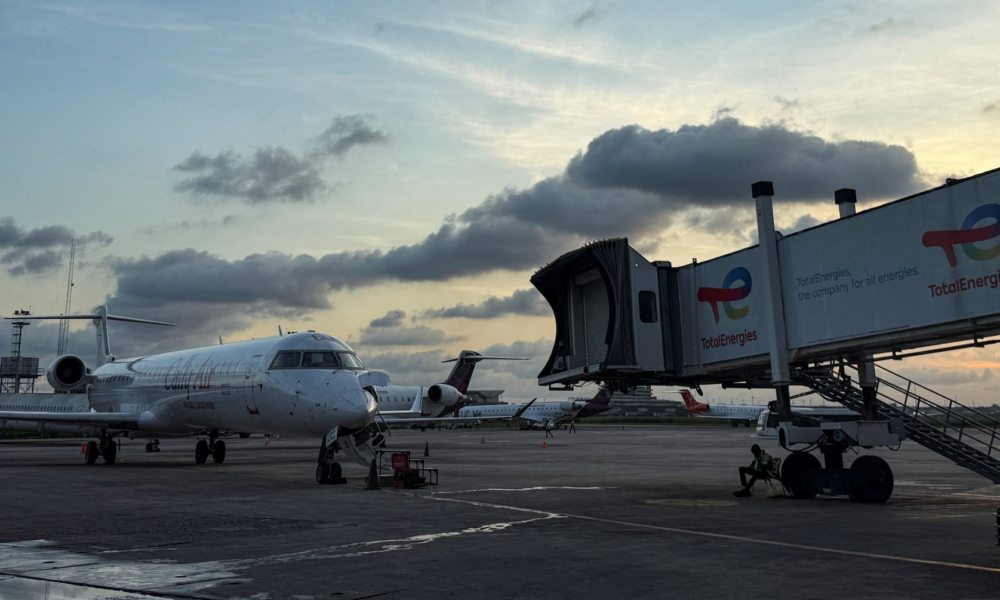
Airlines threaten shutdown, marketers say fuel prices overstated
By: Amarachi Okonkwo The Major Energies Marketers Association of Nigeria (MEMAN) has pushed back against claims that aviation fuel is selling for as high as N3,300 per litre, urging airline operators to explore alternative suppliers while attributing recent price pressures to global supply disruptions and rising logistics costs. The position comes amid escalating tensions between…
-
Afreximbank profit hits $1.15bn as assets soar to N56.7tn
By: Amarachi Okonkwo The African Export-Import Bank has delivered a strong financial performance for the 2025 fiscal year, posting significant profit growth and an expanded balance sheet as it deepened support for trade financing across Africa and the Caribbean. The multilateral lender recorded a net profit of $1.15bn (about N1.5tn), marking an 18 per cent…

