Editorials
Nigeria’s Banking Sector Recapitalisation: Opportunities for Growth

Tracking the heartbeat of business and markets.
Nigeria’s banking sector is entering a transformative phase as the Central Bank of Nigeria (CBN) gears up for its latest recapitalisation exercise. With the March 31, 2026, deadline fast approaching, 27 banks have already tapped the capital market through public offerings, signaling an aggressive push to strengthen capital bases and enhance operational resilience. While some may view this as a routine regulatory measure, a deeper look reveals that this exercise presents a unique opportunity for sustainable growth, innovation, and sectoral reform.

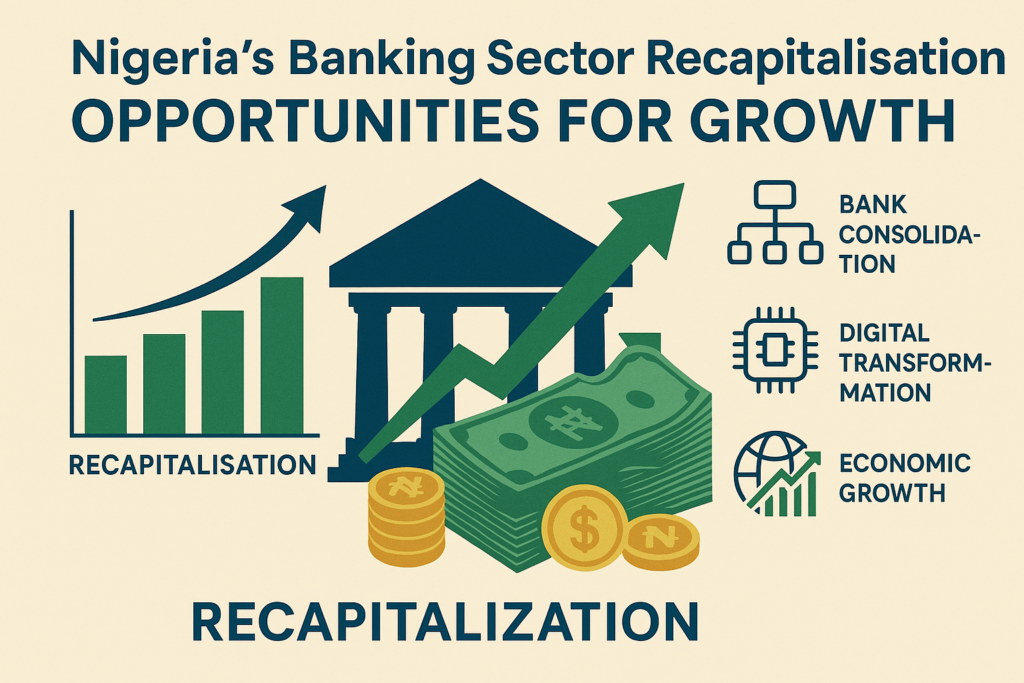
At its core, recapitalisation is about ensuring that banks maintain sufficient equity to absorb shocks, expand lending, and support the broader economy. Nigeria’s financial system has historically been prone to instability whenever capital buffers are inadequate, resulting in credit shortages, liquidity constraints, and diminished investor confidence. By mandating higher capital requirements, the CBN is not only protecting depositors but also positioning Nigerian banks to compete effectively on a regional and global scale.
For investors, the implications are significant. Public offerings tied to recapitalisation exercises present both opportunities and risks. On the one hand, banks that manage to raise capital efficiently, maintain transparent governance structures, and deploy funds strategically are likely to emerge stronger, with improved profitability and market share. On the other hand, oversubscription challenges, market volatility, and macroeconomic headwinds—such as inflation and fluctuating exchange rates—pose risks to investors seeking stable returns. Therefore, careful analysis of each bank’s strategy and financial health is crucial before committing capital.
One of the most immediate benefits of recapitalisation lies in its potential to enhance lending capacity. Nigerian banks play a central role in funding key sectors of the economy, including small and medium-sized enterprises (SMEs), agriculture, and infrastructure. Higher capital levels allow banks to increase credit availability, particularly to underserved segments, without compromising financial stability. For SMEs, which have traditionally struggled to access affordable finance, this can translate into expanded operations, job creation, and improved competitiveness.
Recapitalisation also encourages operational efficiency and modernization. Banks with strengthened balance sheets are better positioned to invest in digital infrastructure, advanced analytics, and customer experience platforms. In a financial landscape increasingly dominated by fintech innovation, the ability to adopt new technologies is critical. Banks that leverage recapitalisation to upgrade systems, automate processes, and enhance digital service delivery will not only retain customers but also attract new business in a rapidly evolving market.
Beyond financial and technological benefits, recapitalisation reinforces corporate governance. To attract investors during public offerings, banks must demonstrate transparency, accountability, and robust risk management. This requirement fosters stronger board oversight, improved internal controls, and adherence to international best practices. Over time, this cultural shift toward governance excellence can enhance public trust and position Nigeria’s banking sector as a reliable partner in regional and global finance.
Yet, challenges remain. Market volatility, inflationary pressures, and geopolitical uncertainties can influence both the success of recapitalisation exercises and their long-term impact. Banks must carefully balance aggressive growth with prudent risk management, ensuring that new capital is deployed strategically rather than merely bolstering balance sheets. Policymakers, too, must maintain regulatory clarity and stability to prevent investor uncertainty from undermining the exercise.
The broader Nigerian economy stands to benefit if recapitalisation is executed effectively. Stronger banks can play a pivotal role in financing critical infrastructure projects, supporting export-oriented businesses, and facilitating financial inclusion. Moreover, as banks become more resilient, they can better withstand economic shocks, reducing the likelihood of systemic crises that can derail growth and stability.
In essence, Nigeria’s banking sector recapitalisation is more than a regulatory compliance exercise. It is a strategic opportunity to modernize operations, strengthen governance, expand credit access, and attract both domestic and foreign investment. For banks willing to embrace innovation, transparency, and strategic deployment of capital, this period represents a chance to redefine their role in the economy and secure a competitive edge in an increasingly interconnected financial market.
The ultimate takeaway is clear: recapitalisation is not just about meeting a capital threshold—it is about creating a resilient, dynamic, and forward-looking banking sector capable of supporting Nigeria’s economic ambitions. Stakeholders across the financial ecosystem—investors, policymakers, and corporate clients—must recognize the opportunities at hand and act decisively. Those who do will not only benefit from the immediate financial gains but will also contribute to building a stronger, more sustainable financial sector that can withstand the challenges of tomorrow.