
business
Economists Raise Questions on Impact of Nigeria’s N11.1tn Capital Spending

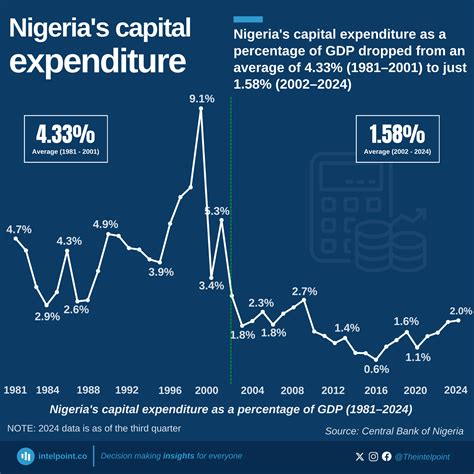
Nigeria spent N11.1 trillion on capital expenditure in 2024, achieving an 85 per cent implementation rate, according to the Minister of Finance and Coordinating Minister of the Economy, Wale Edun. The government attributed the strong implementation to an extended budget cycle designed to ensure the completion of priority projects.
However, some economists are raising concerns about whether this level of spending has translated into tangible benefits for the economy. Professor Akpan Ekpo, a leading economist, argued that delays in the disbursement of funds have hindered the impact of capital spending.
“Capital expenditure is meant to drive economic growth. For 2024, the lag in fund releases means the impact is not yet being felt. Only 17 per cent of the 2025 budget has been released so far. We are effectively waiting for previous years’ expenditures to work through the system,” Ekpo said.
The issue, according to Ekpo, lies not in the scale of spending, but in the timing of disbursements. Delays, he explained, reduce the immediate effect of government investment on infrastructure development, public services, and broader economic activity.
Similarly, Marcel Okeke, a former chief economist at a leading bank, pointed to macroeconomic factors that may have diluted the effectiveness of the expenditure. Rising inflation and currency depreciation have eroded the real value of capital spending, limiting its immediate impact.
“The cost of construction materials has increased sharply over the past year. A bag of cement that cost significantly less in 2023 now sells for around N12,000. Combined with currency depreciation and inflationary pressures, the nominal capital outlay does not go as far in generating tangible outcomes,” Okeke noted. He also cited the removal of petroleum subsidies, which has further affected consumer prices and infrastructure costs, as factors that mask the real benefits of government spending.
Speaking at a macroeconomic outlook event, the Minister of Finance defended the 2024 capital spending outcomes, highlighting the government’s decision to prioritise project completion over abandoning ongoing initiatives. He noted that the aggregate expenditure reflects a commitment to maintaining fiscal discipline while delivering on statutory obligations, including domestic and foreign debt servicing, as well as salary payments.
“Capital expenditure in 2024 reached N11.1 trillion, achieving 85 per cent implementation. For 2025, the focus has been on completing priority projects from the previous year. Despite fiscal challenges, all statutory obligations have been met,” he said.
Edun described the outcomes as part of a broader strategy aimed at stabilising the economy. According to the minister, capital spending creates the fiscal and macroeconomic conditions necessary for stabilising food prices, improving access to finance, scaling up electricity delivery, and accelerating road construction nationwide.
“All these measures are linked to structural reforms that aim to enhance productivity and economic efficiency,” he said. The minister emphasised that capital expenditure is not an end in itself, but a tool to drive inclusive growth and shared prosperity. “Nigeria cannot afford to pause or retreat. Success depends on whether stability translates into sustained economic expansion,” he added.
Despite these assertions, some analysts remain cautious about projecting immediate outcomes from capital spending. They note that while high implementation rates are positive, the real test lies in whether projects are completed on schedule, generate jobs, and stimulate private sector activity.
In addition, the timing of expenditure relative to macroeconomic cycles is critical. Delayed fund releases can reduce the multiplier effect of public investment, limiting its capacity to boost aggregate demand and accelerate growth.
Edun also stressed the importance of productive investment and private sector engagement in driving development. He highlighted the global context, noting that multilateral financing and development assistance are retreating, making domestic resource mobilisation essential for achieving sustainable development goals.
“Global capital flows are increasingly constrained. The SDGs require trillions annually, which are unlikely to be available before 2030. This underscores the need for a holistic approach to domestic resource utilisation,” the minister said.
The government is seeking to encourage domestic and international investment as a complement to public expenditure. By linking capital spending to broader economic priorities, officials aim to create an environment where fiscal stability supports growth that is job-rich and inclusive.
While the debate over the immediate impact of the N11.1 trillion expenditure continues, the discourse highlights persistent challenges in translating large-scale public spending into visible economic outcomes. Factors such as delayed disbursements, inflationary pressures, currency depreciation, and the need for private sector participation all influence the effectiveness of capital expenditure.
Economists suggest that future budget cycles should focus not only on total allocations and implementation percentages but also on timely disbursement, monitoring, and evaluation of project outcomes. Transparent reporting and accountability mechanisms are essential to ensure that public resources generate measurable economic benefits and improve the quality of public infrastructure and services.
As Nigeria progresses with its capital spending plans for 2025 and beyond, policymakers and analysts alike are watching closely to assess whether fiscal discipline and high implementation rates will translate into tangible improvements in infrastructure, productivity, and overall economic well-being.
-
Visa, Zenith Bank unveil premium Signature Card for affluent Nigerians
By: Amarachi Okonkwo Visa Inc. has partnered with Zenith Bank to introduce the Visa Signature Card, a premium payment solution designed to cater to the lifestyle and financial needs of affluent customers in Nigeria. The card was unveiled during a media briefing held at Zenith Bank’s headquarters in Victoria Island, where executives from both organisations…
-
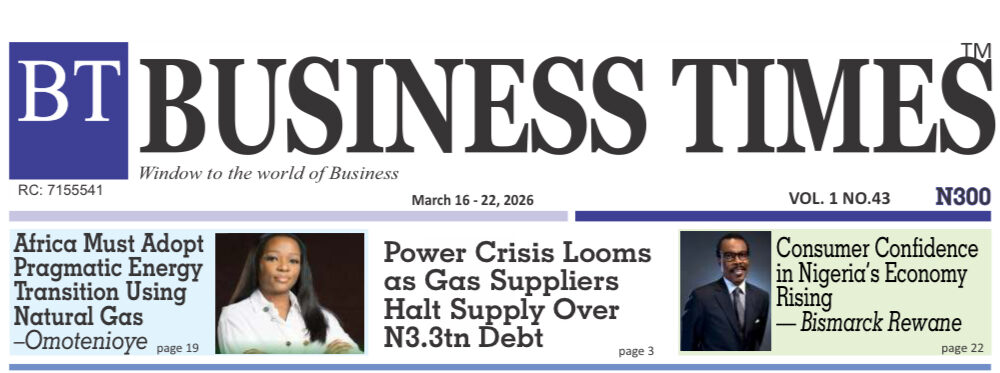
Business Times VOL:1 NO:43 Edition
-
AfDB Approves $5.52m Grant to Support Tax Reforms in Nigeria, West Africa
The African Development Bank (AfDB) Group has approved a $5.52 million grant aimed at strengthening tax administration and boosting domestic revenue mobilization in Nigeria and several West African countries. The announcement was contained in a statement confirming the signing of a grant agreement between the AfDB and the West African Tax Administration Forum (WATAF). The…