Market Trends
FG Plans 50% Upgrade of Nigeria’s Textile Sector

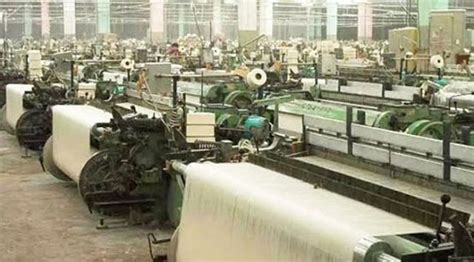
The Federal Government is reportedly considering modernising half of Nigeria’s operational textile capacity with advanced equipment over the next five years as part of a broader sector revitalisation plan. This follows reports that textile imports reached N814.27 billion in the first nine months of 2025, despite government promises to strengthen the local industry.
According to a December 2025 document obtained by The PUNCH, the government’s proposals include tax incentives, a national textile training institute, and low-interest loans to support the sector’s revival.
The plan includes the establishment of a Textile Modernisation Fund of approximately N500 billion, to be administered by the Bank of Industry. The fund would provide long-term loans of seven to ten years at single-digit interest rates, with a two-year moratorium, enabling textile manufacturers to acquire modern machinery. The target is to modernise 50% of operational textile capacity within five years.
To reduce energy costs, the government is considering tax holidays or subsidies for mills that adopt renewable energy solutions, with a goal of having 25% of mills transition to hybrid or renewable energy within three years. Additional tax incentives for new textile investments that use at least 70% local raw materials are also planned, with the aim of increasing foreign direct investment in the sector by 30% over three years.
On skills development, the proposals suggest establishing a National Textile Training Institute to train workers in digital technologies, industrial sewing, dyeing, and equipment maintenance, targeting 2,000 certified technicians annually after the first two years.
Hamma Kwajaffa, Director-General of the Nigerian Textile Manufacturers Association, welcomed the plans, describing the measures as practical and potentially transformative if implemented. He noted that the proposed fund would be more sustainable than past interventions, emphasizing the importance of continuous government communication with industry stakeholders.
Data from the National Bureau of Statistics show that textile imports stood at N228.83 billion in Q1 2025, N337.12 billion in Q2, and N248.32 billion in Q3, highlighting the need for urgent reform. Industry players cited policy gaps, weak financing, and structural challenges as key obstacles to local production.
Kwajaffa added that resolving conflicting positions among top officials and reducing bureaucratic fragmentation would be critical for the sector’s revival.