Opinion
Aviation tax removal requires collective government decision — Keyamo

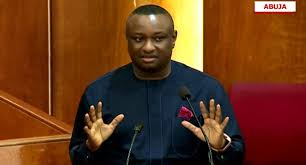
Minister of Aviation and Aerospace Development, Festus Keyamo, says the removal of taxes in the aviation sector cannot be done unilaterally, stressing that such decisions require full government consensus and legislative backing.
Speaking on Monday in Abuja during an event marking 100 years of aviation in Nigeria, Keyamo explained that although operators continue to complain about multiple taxation, the Ministry of Aviation does not have the legal authority to abolish statutory levies on its own. He noted that any major tax adjustment must involve the Ministry of Finance, relevant tax authorities, and the National Assembly.
According to him, aviation taxes are established by law, and altering them goes beyond ministerial discretion. He added that President Bola Tinubu has shown interest in easing the financial burden on airlines, pointing out that the president earlier exempted the sector from a scheduled four percent tax increase.
Keyamo said a presidential team is already reviewing the issue of multiple taxation affecting airlines and promised continued collaboration with stakeholders to reduce operational difficulties. He emphasised that while taxation remains a key concern, infrastructure remains the “big elephant in the room,” stressing the need to develop modern airport hubs capable of supporting seamless international connections. He argued that improved facilities would allow domestic airlines such as Air Peace to run more profitable long-haul operations and expand their regional footprints.
The minister also identified limited access to aircraft leasing and financing as a major barrier to airline growth. He noted that despite these challenges, Nigeria’s market size and traffic potential continue to favour industry expansion.
At the same event, which brought together aviation veterans, operators, and policymakers, Keyamo described the centenary celebration as a milestone that honours the contributions of pioneers who shaped the industry. He said the government expanded the list of honourees from 40 to 47 as more names emerged during the planning process.
Speaking on behalf of the award recipients, Air Peace Chairman and CEO, Allen Onyema, commended the Tinubu administration for what he described as unprecedented support for domestic carriers. He said reforms in the sector, including regulatory improvements and new route approvals, had helped stabilise airline operations after years of difficulty.
Onyema warned, however, that elements of the new tax reform regime scheduled to take effect in January 2026 could severely strain local airlines. He revealed that operators plan to meet with the National Assembly, alongside the minister, to address the concerns before the policy is implemented.
He noted that recent government actions, such as supporting Air Peace’s Lagos–London and Abuja–London routes, have forced foreign airlines to cut fares, bringing relief to Nigerian travellers. Before the entry of domestic carriers, he said passengers paid as much as N16 million for a six-hour flight to London.
Onyema further praised the Director General of the Nigerian Civil Aviation Authority (NCAA), Captain Chris Najomo, and other agencies for consistent regulatory support despite limited resources. He encouraged more Nigerian airlines to explore regional and international routes to enhance market competitiveness.