
Business Briefings
NNPC Faces N8.07tn Crude-Backed Loan Burden

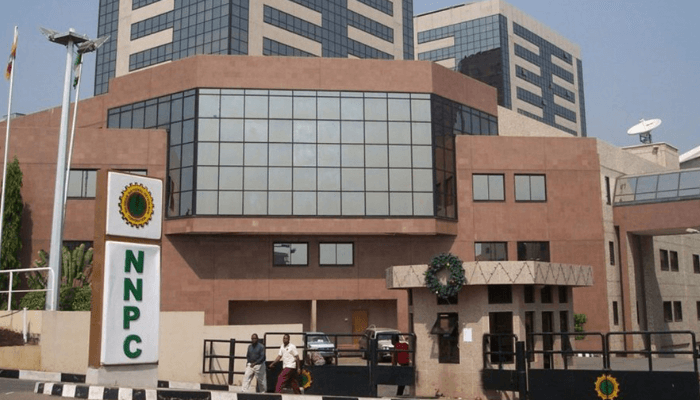
The Nigerian National Petroleum Company Limited is currently managing crude-secured loan obligations estimated at N8.07 trillion, based on its latest financial disclosures. These obligations span several forward-sale and project-financing arrangements tied to crude oil and gas deliveries.
One major exposure stems from the Eagle Export Funding structure. While older tranches of the loan—$935 million and $635 million—have been repaid, an outstanding $900 million facility remains, backed by 21,000 barrels per day and due for repayment between 2024 and 2028. The balance stood at N1.1 trillion by the end of 2024.
Another commitment is the incremental gas-supply financing arrangement with Nigeria LNG Limited. Of the N772 billion advanced for future gas deliveries, N460 billion worth of supply remained outstanding at the end of 2024, with an additional N12 billion financing charge.
Financing tied to refinery rehabilitation projects also contributes significant obligations. Project Yield, which supports the Port Harcourt Refinery upgrade, had drawn N1.4 trillion by 2024 and requires deliveries equivalent to 67,000 barrels per day once repayment starts in mid-2025.
Project Leopard, a five-year crude-backed deal, carried N1.3 trillion in outstanding obligations, with repayment set to begin in 2025. The largest single exposure is Project Gazelle, which finances advance tax and royalty payments on deepwater assets. By December 2024, NNPCL had drawn N4.9 trillion of the N5.1 trillion facility, leaving an outstanding N3.8 trillion pledged against sustained crude deliveries of 90,000 barrels per day.
In total, crude volumes tied to major loan arrangements—Eagle (21,000 bpd), Yield (67,000 bpd), Leopard (35,000 bpd), and Gazelle (90,000 bpd)—amount to 213,000 barrels daily, representing a significant portion of Nigeria’s production. This limits the barrels available for fresh revenue and poses long-term risks to government earnings.
Analysts warn that the weight of these commitments exposes the company to production shortfalls and price volatility. Industry experts argue that forward-sale and swap arrangements signed in earlier years continue to constrain present-day revenue inflows, despite improved transparency under the company’s current leadership.