
Finance
Nine Banks Earn N2.81tn from Fees and Commissions

At the end of the third quarter of 2025, nine financial institutions generated about N2.81tn from account maintenance charges, commissions on collections, e-business, and other service fees.
An analysis of their unaudited results filed with the Nigerian Exchange Limited showed this represents a 24.10 per cent increase compared to the N2.27tn earned during the same period in the previous year.
The banks include Access Holdings, First HoldCo, Zenith Bank, United Bank for Africa (UBA), Guaranty Trust Holding Company (GTCO), Stanbic IBTC Holdings, Sterling Financial Holding Company, Wema Bank, and Ecobank Transnational Incorporated.
Fees and commission income for the period covered credit-related fees such as advisory, penal, and commitment charges for administration and advisory services rendered to customers before the acceptance of offer letters. Other items under this category included account maintenance fees (N1 per N1,000 on all customer-induced debit transactions) and card maintenance fees, which are charged monthly throughout the card’s validity period.
Additional income sources included commissions on bills and letters of credit, account handling charges, commissions on other financial services, foreign currency-denominated transactions, e-business income, and retail account charges.
Conversely, fees and commission expenses covered charges incurred for services provided to customers transacting on the banks’ digital channels, including internet banking, mobile banking, and online purchase platforms.
During the same period, total fees and commission expenses for the financial institutions (excluding Wema Bank, which did not disclose figures) increased by 24.38 per cent to N578.53bn, up from N465.13bn in the previous year.
A closer analysis showed that the growth rate in fees and commission expenses (24.38 per cent) slightly outpaced income growth (24.10 per cent), reflecting higher transaction costs, increased commissions paid, and rising technology and infrastructure expenses to support digital operations.
Among the banks, Access Holdings recorded the highest increase in fees and commission income—N198.88bn, up 49.53 per cent—followed by Sterling Financial Holding Company (44.75 per cent) and Stanbic IBTC Holdings (41.78 per cent).
Banks that reported modest growth included UBA (3.85 per cent), Zenith Bank (10.45 per cent), and Wema Bank (11.43 per cent). Others like First HoldCo saw a 26.86 per cent rise to N260.48bn, Ecobank reported a 23.57 per cent increase, and GTCO grew 16.79 per cent to N210.49bn, bringing total fees and commission income for the nine banks to N758.16bn in Q3 2025.
On the expense side, Stanbic IBTC recorded the highest year-on-year increase at 84.06 per cent, rising to N17.93bn from N9.74bn in 2024. Access Holdings followed closely with a 73.80 per cent jump to N124.49bn from N71.63bn, while First HoldCo came third with a 37.67 per cent rise to N46.78bn.
Zenith Bank was the only lender to record a decline in fees and commission expenses, down 0.40 per cent to N96.10bn from N96.49bn, demonstrating stronger cost efficiency. UBA, despite a modest expense growth of 8.89 per cent, was the highest spender at N173.11bn during the period.
Other increases were recorded by GTCO (25.80 per cent), Sterling (12.83 per cent), and Ecobank (29.56 per cent).
Meanwhile, the President of the Bank Customers Association of Nigeria, Dr. Uju Ogubunka, said the association had formally written to the Central Bank of Nigeria (CBN) regarding excessive bank charges.
He stated, “I don’t think any bank can justifiably say, ‘Oh, this is why we are excessively charging our customers.’ There are guidelines already — a guide to bank charges is there.”
He added that although some fintech firms now offer zero transfer charges, traditional banks should at least adhere to the official CBN guidelines on bank fees.
“Even if they don’t want to give us those things free of charge, they should restrict themselves to what the guidelines permit. If the guideline says charge one naira, don’t charge two or three. Stay within the rules if you can’t reduce it to encourage your customers,” he said.
In October, the House of Representatives resolved to investigate what it described as arbitrary and unexplained deductions by deposit money banks from customers’ accounts.
The resolution followed a motion by Kwara State lawmaker Tolani Shagaya, who raised concerns about recurring bank charges despite multiple warnings from the CBN. The motion, titled “Need to Curb Arbitrary Bank Charges and Protect Nigerian Customers,” sought to ensure better transparency and consumer protection across the banking sector.
-
NNPC completes River Niger crossing of OB3 gas pipeline, boosts national gas network
By: Amarachi Okonkwo The NNPC Gas Infrastructure Company (NGIC), a subsidiary of NNPC Limited, has completed the River Niger Crossing of the 130-kilometre Obiafu-Obrikom-Oben (OB3) Gas Pipeline, marking a major milestone in Nigeria’s gas infrastructure expansion. The crossing, executed approximately two kilometres beneath the River Niger riverbed, was delivered using advanced horizontal directional drilling (HDD)…
-
Naira stability, rising GDP spark hopes of poverty decline
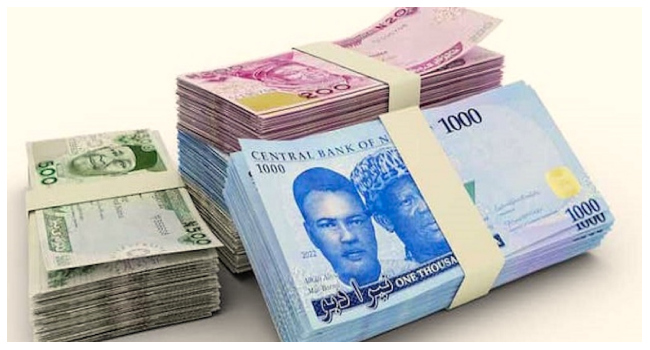
By: Amarachi Okonkwo Nigeria’s economy may be entering a recovery phase, with output growth now surpassing population expansion, a shift analysts say could lay the groundwork for sustained poverty reduction if maintained. This is the central finding of a new report by Quartus Economics, which points to a strong rebound in 2025 following a challenging…
-

Nigeria, Malaysia trade hits N1.82tn in five-year Surge
By: Amarachi Okonkwo Nigeria’s trade relationship with Malaysia has deepened significantly, with total bilateral trade reaching approximately N1.82 trillion over the past five years, according to the Nigeria Customs Service (NCS). In a statement issued on Thursday, the agency’s National Public Relations Officer, Abdullahi Maiwada, disclosed that imports from Malaysia rose sharply from N159.9 billion…