
Features
Charcoal Makes a Comeback as Gas Prices Skyrocket Across Nigeria

By Deborah Oladapo
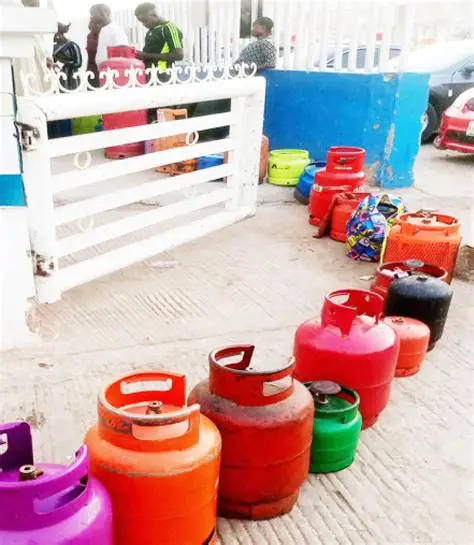
When Adewale (not his real name) stopped at a gas station in Gbagada, Lagos, on Monday morning, he was told a kilogram of cooking gas cost ₦1,300. He went home to fetch his cylinder. Less than an hour later, when he returned, the price had jumped to ₦1,500.
“The boss just called — prices have changed,” the attendant said, shrugging as if it were routine.
Two days later, on Wednesday morning, at Onike-Iwaya in Yaba, a food vendor battled a different side of the same problem. Her daily cooking was delayed because she could not afford to refill her gas cylinder. Around her area, prices had climbed to between ₦2,000 and ₦3,000 per kilogram — far beyond what she could pay to start her early-morning food sales.
“I couldn’t buy gas, so I used charcoal,” she said, fanning her slow-burning stove. “But it delayed me, and most of my customers went elsewhere.”
Her story reflects the struggle faced by many small business owners across Lagos and other cities, as the cost of liquefied petroleum gas (LPG) — commonly called cooking gas — continues to rise sharply across Nigeria.
In several parts of Lagos, Ogun, and Oyo states, residents now pay between ₦1,700 and ₦2,000 per kilogram, with some areas reporting prices as high as ₦3,000. The sharp increase has triggered fresh outrage among consumers and business owners already battling high food prices and fuel costs.
Gas marketers, however, say the current spike is not due to any government-approved increment, but to supply disruptions and speculative pricing.
The Nigerian Association of Liquefied Petroleum Gas Marketers (NALPGAM) blamed the rise on temporary supply shortages caused by maintenance work at the Dangote Refinery and compounded by the recent strike by the Petroleum and Natural Gas Senior Staff Association of Nigeria (PENGASSAN).
NALPGAM’s National President, Oladapo Olatunbosun, said the situation was “artificial and temporary,” accusing some operators of taking advantage of the supply gap to inflate prices.
“There’s been no official increment,” Olatunbosun said on Channels Television’s Morning Brief. “What is happening is that some marketers are taking advantage of the shortage in supply and the market forces that have increased demand. They are cashing in to make good money, which is wrong.”
Before the disruptions, the Dangote Refinery supplied about 50 trucks of LPG daily, stabilising prices and reducing dependence on imported gas. But maintenance slowed loading operations, and when the PENGASSAN strike began, vessel inspections and product discharges at Apapa depots were halted, leaving many plants empty.
“The refinery was undergoing renovation, and trucks started spending up to two weeks before getting products,” Olatunbosun explained. “When marketers switched to Apapa, the strike disrupted inspection schedules, drying up stocks.”
As supply tightened, depot owners adjusted prices upward, and retailers followed suit to avoid losses. The result is an uneven market where prices can vary widely even within the same city — and sometimes change twice in a day.
A plant manager in Ifo, Ogun State stated that most gas outlets now operate in reaction to depot updates. “We get calls from our suppliers — sometimes twice a day — saying the cost has gone up again,” he said. “If we don’t adjust immediately, we’ll sell at a loss. It’s not that we like to increase prices.”
Nigeria’s domestic LPG consumption has risen from about 1.2 million metric tonnes to nearly two million in the last three years, according to industry estimates. But with local production still insufficient, the country depends heavily on private importers and depot operators — who often determine prices based on global market rates and exchange rate fluctuations.
The impact has been hardest on households and small businesses. Food vendors, caterers, and restaurant owners say the high cost of gas has eaten deep into their profits, forcing many to revert to charcoal or kerosene.
In Onike-Iwaya, the food vendor said she now alternates between both fuels depending on the price. “Gas used to be faster, cleaner,” she said. “Now, I only use it when business is good. Charcoal is cheaper, but it wastes my time.”
Olatunbosun advised Nigerians to buy only from registered gas bottling plants, warning that roadside sellers often inflate prices. He said legitimate gas plants under NALPGAM still sell between ₦1,000 and ₦1,300 per kilogram, depending on location and logistics costs.
“The problem is when people buy from third-party vendors. The price keeps increasing with every middleman,” he said.
Industry experts have urged the Federal Government to address the deeper issues behind the recurring crisis — including logistics bottlenecks, transportation costs, and inconsistent supply from local producers.
“The market has become unpredictable,” one depot operator said. “Until the government improves storage and supply systems, both marketers and consumers will keep struggling.”
For Nigerians like Adewale and the Onike vendor, the explanation offers little comfort. “I left home with enough money to refill my gas,” Adewale said. “I came back, and it wasn’t enough anymore.”