Business Briefings
Tinubu: Fuel Subsidy Savings Redirected to Infrastructure, Economic Reform

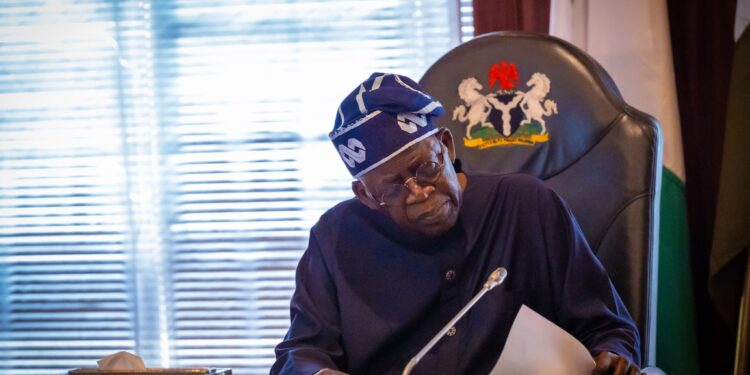
President Bola Ahmed Tinubu has reaffirmed his administration’s commitment to utilizing the savings from the fuel subsidy removal to boost infrastructure and strengthen public trust. Speaking at the National Conference on Public Accounts and Fiscal Governance, the President emphasized that redirecting over ₦4 trillion formerly spent on subsidies is central to his economic transformation agenda.
Represented by the Minister of State for Finance, Doris Uzoka-Anite, President Tinubu described the subsidy regime as unjust and unsustainable. “In 2022 alone, more than ₦4 trillion was spent on fuel subsidies—exceeding the nation’s capital expenditure. It was a burden that largely benefited the wealthy, encouraged smuggling, and weakened fiscal responsibility,” he said.
According to the President, the subsidy removal has enabled targeted investments in social welfare, public transportation, and critical infrastructure. “More importantly, these reforms have strengthened Nigeria’s fiscal buffers, making the economy more resilient to external shocks,” he added.
Tinubu highlighted the structural issues that have long plagued the nation’s economy—ranging from fiscal leakages to an overdependence on oil revenues. He noted that recent tax law reforms were aimed at broadening the tax base, especially through the inclusion of the informal sector, simplifying compliance for SMEs, and digitising revenue collection to curb leakages.
The President also referenced initiatives like the National Credit Guarantee Company, aimed at empowering local producers, supporting small businesses, and encouraging non-oil exports. “This is more than economic reform—it is job creation, innovation, security, and long-term stability,” he said.
On monetary matters, he acknowledged the Central Bank’s progress in stabilizing the naira and controlling inflation, noting improved coordination between fiscal and monetary policies. “Our goal is to tackle inflation by addressing structural challenges, particularly in food supply chains,” he said.
Tinubu urged lawmakers, especially members of the Public Accounts Committees (PACs), to carry out their constitutional oversight roles with integrity. “Oversight is a patriotic responsibility, not a political weapon. Every naira must reflect our people’s priorities,” he stated.
Akpabio Warns Against Defiance of Legislative Oversight
Senate President Godswill Akpabio, represented by Senator Abdul Ningi, called on PACs in both chambers to fully exercise their constitutional oversight powers. He warned against the increasing trend of government agencies disregarding legislative summons, describing it as an affront to democracy.
“The PACs are constitutional watchdogs empowered under Sections 80, 81, and 88 to summon anyone—public or private—to account for public funds,” Akpabio said.
He lamented that some agencies, including top civil servants, have failed to comply with legislative invitations and emphasized the need for discipline and accountability. He also stressed the importance of equipping the legislature with the digital tools and expertise needed to oversee governance across a nation of over 250 million people.
Over ₦300bn Audit Infractions Unresolved – Speaker Abbas
Speaker of the House of Representatives, Tajudeen Abbas, represented by House Leader Julius Ihonvbere, expressed concern over unaddressed fiscal breaches totaling over ₦300 billion flagged in audit reports. He emphasized that fiscal accountability must go beyond policy declarations and include strict enforcement.
“We’ve been advocating the enforcement of audit recommendations and greater collaboration with anti-corruption agencies. Delayed action and lack of consequences have allowed public officials to ignore audit queries with impunity,” Abbas said.
He noted that the House has improved the PAC review process, introduced follow-up mechanisms to track compliance, and is working toward the digitization of audit and financial reports.
According to Abbas, fiscal oversight has become a central pillar of the 10th House’s legislative priorities. “We’re moving from procedural reviews to impact-driven auditing. Our reviews now focus on how budgeted funds translate into real-life outcomes,” he said.
He also emphasized the need for financial transparency to be accessible to the public, not just experts. “Audit reports should be simplified and made publicly accessible. Fiscal transparency should empower the average Nigerian to participate in shaping governance,” he added.
Wadada, Salam Call for Responsible Governance and Fiscal Reform
Senator Ahmed Wadada, Chairman of the Senate Public Accounts Committee, stressed the urgency of reforming Nigeria’s fiscal architecture. He highlighted the need for transparent service delivery to restore citizens’ confidence in governance.
“We must instil fiscal discipline based on transparency and accountability. Public funds are not privileges—they’re a sacred trust,” Wadada stated.
Referencing recent audit reports, he acknowledged persistent gaps in financial reporting and called for stronger financial management systems. He revealed that the PAC has expanded oversight, organized public hearings, and engaged stakeholders to promote financial discipline.
House PAC Chairman, Bamidele Salam, called for a complete overhaul of Nigeria’s fiscal governance systems. He said the public sector must demonstrate that funds are being used for public good, not just stated in reports.
“The theme of this conference reflects our goal—to create a transparent, efficient, and accountable system for managing public resources,” Salam said. He added that reforms under the current administration’s “Renewed Hope” agenda must be matched by concrete improvements in financial reporting, budgeting, and institutional capacity.
He called for aligning governance with constitutional mandates and making public resource management more citizen-focused.