Uncategorized
CBN Bars Local Deposits for Diaspora Accounts


The Central Bank of Nigeria (CBN) has prohibited local deposits into the newly launched Non-Resident Nigerian Ordinary Account (NRNOA) and Non-Resident Nigerian Investment Account (NRNIA), designed to cater specifically to Nigerians living abroad.
This directive, outlined in a circular issued by the apex bank on January 10, 2025, highlights the CBN’s focus on channelling external inflows and diaspora investments into the nation’s economy.Signed by Dr W. J. Kanya, the acting Director of the Trade and Exchange Department, the circular stated,
“Deposits into non-resident accounts must originate from external sources through approved channels. Local deposits are prohibited, except for traceable proceeds from approved local investments linked to prior foreign currency inflows and settlement of foreign exchange transactions i.e. sale of FCY balances to authorised dealers.
“Transfers to other local accounts within Nigeria are allowed only in Naira.”
The restriction is part of a broader framework to ensure the accounts serve their intended purpose of boosting remittances and investments from the diaspora.
Accounts designed to drive diaspora contributions
The NRNOA and NRNIA accounts aim to provide Nigerians in the diaspora with secure platforms to manage funds and invest in Nigeria’s financial markets.
Related News:
- Diaspora Remittances Surge by 61% – CBN
- CBN Reminds Nigerians That PTA/BTA Purchases Can Still Be Made Through Banks
- CBN Sets $100,000 Minimum Trade for Banks on FX Platform
The NRNOA allows non-resident Nigerians (NRNs) to remit foreign earnings into the country and manage funds in either foreign currency (FCY) or naira.
These earnings may include salaries, allowances, dividends, and rental income. Also, the NRNOA supports local spending on family maintenance, education, and healthcare.
On the other hand, the NRNIA is designed to facilitate diaspora investments in Nigeria, allowing NRNs to invest in assets denominated in foreign currency or Naira. Eligible investments include domestic bonds, equities, government securities, mortgage products, and the Diaspora Bond.
The CBN highlighted that these accounts would provide greater flexibility for NRNs to diversify their investment portfolios while contributing to Nigeria’s economic development.
To ensure compliance with this framework, the CBN has outlined strict guidelines for local transfers. Transfers from these accounts to other local accounts within Nigeria are permitted only in Naira, with no provision for such funds to originate locally unless linked to approved investment proceeds.
The CBN clarified that this measure is essential to maintain the integrity of the accounts as tools for external remittances and diaspora investments.
Framework to enhance compliance and transparency
The apex bank has also emphasised the integration of digital platforms to facilitate seamless onboarding and account management. Partnering with the Nigeria Inter-Bank Settlement System (NIBSS), banks are mandated to offer digital solutions for issuing Bank Verification Numbers (BVNs) and enabling remote Know-Your-Customer (KYC) updates.
These measures are expected to enhance the accessibility and usability of the accounts for Nigerians in the diaspora.
Eligibility for these accounts requires proof of residency and identity, such as a valid or expired Nigerian passport, or a foreign passport accompanied by evidence of Nigerian citizenship. Investors based in the United States must also comply with IRS FATCA regulations.
The prohibition on local deposits reflects the CBN’s strategy to maximise external inflows into the Nigerian economy.
By restricting the sources of funding for these accounts, the CBN aims to create a transparent and efficient framework that aligns with global Anti-Money Laundering (AML) and Counter-Terrorism Financing (CTF) standards.
Interest earned on these accounts will be subject to Nigerian tax laws, while specific exemptions, such as those for government bonds, will be detailed in a Frequently Asked Questions (FAQ) document expected to be released soon.
-
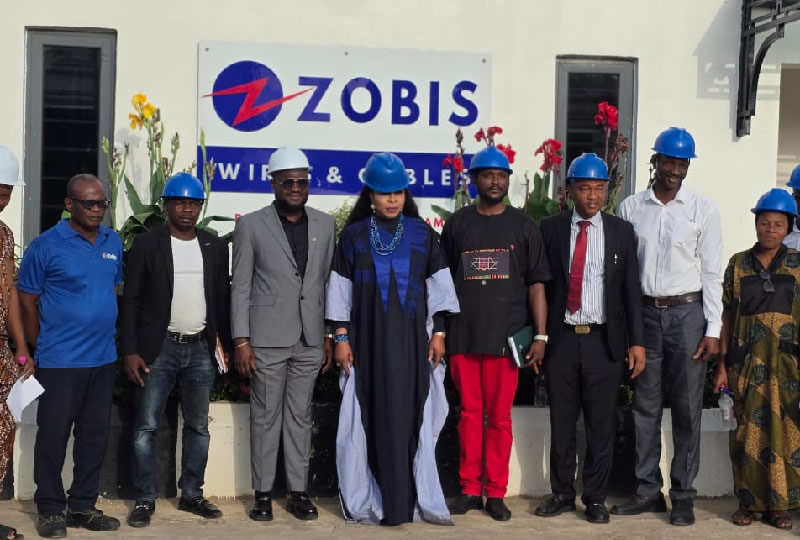
MAN, Zobis Cable strengthen push for South-East industrial growth
The Manufacturers Association of Nigeria (MAN), South-East Zone, has intensified efforts to deepen industrial development in the region following a strategic engagement with Zobis Cable Factory in Anambra State, as stakeholders seek to strengthen local manufacturing capacity and competitiveness. A delegation of the association, led by the Chairman for Anambra, Enugu and Ebonyi states, Ada…
-
NNPC completes River Niger crossing of OB3 gas pipeline, boosts national gas network
By: Amarachi Okonkwo The NNPC Gas Infrastructure Company (NGIC), a subsidiary of NNPC Limited, has completed the River Niger Crossing of the 130-kilometre Obiafu-Obrikom-Oben (OB3) Gas Pipeline, marking a major milestone in Nigeria’s gas infrastructure expansion. The crossing, executed approximately two kilometres beneath the River Niger riverbed, was delivered using advanced horizontal directional drilling (HDD)…
-

Naira stability, rising GDP spark hopes of poverty decline
By: Amarachi Okonkwo Nigeria’s economy may be entering a recovery phase, with output growth now surpassing population expansion, a shift analysts say could lay the groundwork for sustained poverty reduction if maintained. This is the central finding of a new report by Quartus Economics, which points to a strong rebound in 2025 following a challenging…
