Business Briefings
Regulator dismantles illicit alcohol network in Lagos, seizes 1,800 cartons

The National Agency for Food and Drug Administration and Control (NAFDAC) has intensified its crackdown on counterfeit consumer goods, uncovering a large-scale illegal alcohol operation in Lagos and shutting down two unlicensed production sites linked to the trade.
The enforcement action, carried out across key commercial zones in the state, resulted in the seizure of fake and adulterated alcoholic beverages valued at about N350 million. The operation, according to the agency, was driven by actionable intelligence pointing to widespread counterfeiting activities within major trading hubs.
In a statement released after the raid, NAFDAC disclosed that its operatives stormed locations at Zamfara Plaza within the Trade Fair Complex as well as parts of Lagos Island. The agency said the coordinated exercise exposed an elaborate supply chain built around the production and distribution of substandard alcohol products.
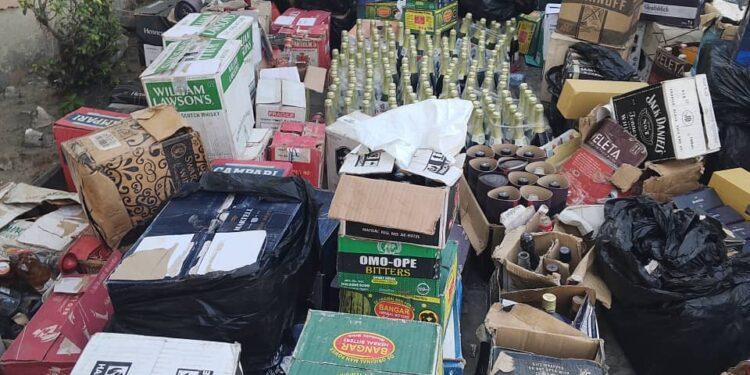
Officials reported that more than 1,800 cartons of fake alcoholic drinks were recovered during the operation, underlining the scale and sophistication of the illicit network. The confiscated products, packaged to resemble well-known brands, were allegedly prepared for distribution across the Lagos market and beyond.
Further inspection of the sites revealed makeshift production facilities designed to imitate legitimate manufacturing processes. These included plastic mixing containers, improvised filtration systems, empty branded bottles, corks, and packaging materials used to give the counterfeit drinks an appearance of authenticity.
The agency noted that the setup allowed operators to produce large volumes of adulterated beverages while evading regulatory scrutiny. By reusing branded containers and replicating packaging, the illegal manufacturers were able to infiltrate formal retail channels and deceive unsuspecting consumers.
NAFDAC warned that such practices pose serious public health risks, as the composition and safety standards of the counterfeit drinks cannot be guaranteed. Adulterated alcohol has been linked in past incidents to poisoning, organ damage, and in extreme cases, fatalities.
The agency urged consumers to remain vigilant and to purchase alcoholic products only from authorised distributors and reputable outlets. It also encouraged the public to report suspicious products or sales points through its official channels, including its toll-free line.
The latest enforcement action highlights the persistence of Nigeria’s illicit alcohol market, which industry stakeholders say continues to thrive despite regulatory efforts. A 2024 survey by the Spirits and Wines Association of Nigeria estimated that illegal products account for roughly 40 per cent of the country’s spirits and wine market—indicating that nearly two out of every five bottles in circulation may come from unregulated sources.
Experts attribute the prevalence of counterfeit alcohol to a combination of economic and structural factors. High taxation on legitimate products, weak enforcement in some areas, and strong demand for cheaper alternatives have created a fertile environment for illegal operators.
Beyond the immediate health concerns, the economic implications are also significant. Counterfeit producers operate outside the tax system, depriving the government of revenue while undercutting legitimate manufacturers who comply with safety and quality standards.
Industry analysts warn that unless enforcement is sustained and consumer awareness improves, the illicit trade could continue to expand, further distorting the market and undermining investor confidence in the sector.
NAFDAC, however, signalled that it will maintain pressure on illegal operators, stressing that the latest raid is part of a broader strategy to sanitize the market and protect public health.