
By: Amarachi Okonkwo
Dangote Fertiliser has recorded a spike in international demand amid the ongoing crisis in the Middle East, as tensions between the United States, Israel and Iran disrupt global supply chains, Bloomberg reports.
According to the Vice President of Dangote Industries Limited, Devakumar Edwin, the disruption has significantly tightened supply in the international market, leading to increased demand for fertiliser from alternative producers.
“Demand has gone up substantially due to the shortage in the global market,” Edwin said in an interview with Bloomberg.
Read Also:
- Dangote Refinery raises petrol, diesel prices amid global oil rally
- FCMB Meets Regulatory Capital Threshold with N500bn Funding Drive
The surge in demand follows growing concerns over the movement of fertiliser shipments through the Strait of Hormuz, the strategic waterway linking the Persian Gulf to the Arabian Sea. A significant portion of global fertiliser exports typically passes through the corridor.
However, the ongoing conflict involving Iran has constrained maritime activity in the region, limiting fertiliser exports and disrupting supplies of key products such as urea and ammonia produced in the country. The crisis has also contributed to a rise in natural gas prices, a key feedstock used in fertiliser production.
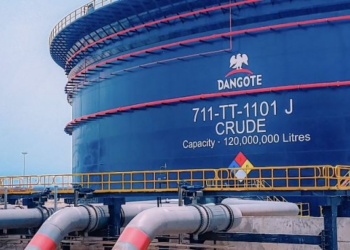
Dangote’s fertiliser plant, regarded as Africa’s largest granulated urea facility, has an annual production capacity of about three million tonnes of urea and ammonia. The company exports about 37 per cent of its output to the United States and has previously outlined plans to become the world’s largest exporter of urea within the next four years.
The development comes as Africa continues to rely heavily on imported fertiliser. The continent imports more than six million metric tonnes annually, a dependence that increases production costs for farmers and exposes the agricultural sector to global supply shocks.
In June last year, President of the Dangote Group, Aliko Dangote, announced plans to expand the $2.5bn Dangote Fertiliser Plant to boost production capacity and support Africa’s drive toward fertiliser self-sufficiency.
Dangote said the expansion could enable the continent to achieve fertiliser self-sufficiency within 40 months, reducing reliance on imports and strengthening agricultural productivity.
He also projected that fertiliser exports from the plant could generate significant foreign exchange earnings for Nigeria. Speaking during a courtesy visit to the headquarters of the Nigerian Ports Authority in Marina, Lagos, Dangote said the company planned to export about 16,000 tonnes of fertiliser daily within the next two years.
According to him, the volume could generate between $6.5m and $7m in daily revenue, positioning the company as a major contributor to Nigeria’s foreign exchange inflows.






 By
By


 By
By