Global Business Today
China Selects Nigeria’s Ogidigben Gas Industrial Park as Top Belt and Road Project in 2025

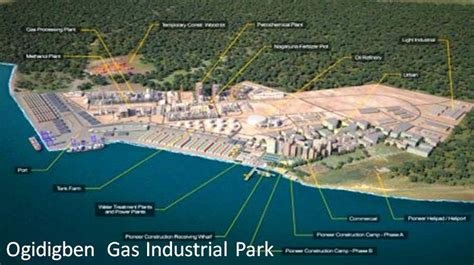
Nigeria has emerged as the largest global beneficiary of China’s Belt and Road Initiative (BRI) construction activities, following the selection of the Ogidigben Gas Revolution Industrial Park (GRIP) in Delta State as the single biggest BRI project worldwide in 2025.
According to a new assessment by China energy specialist Christoph Nedopil of Griffith University, construction contracts linked to the Ogidigben Gas Industrial Park account for an estimated $20 billion of China’s total BRI engagement with Nigeria during the year. Overall, Nigeria secured approximately $24.6 billion in BRI-related construction contracts, placing it ahead of all other countries participating in the initiative.
The Ogidigben Gas Industrial Park is one of Nigeria’s most ambitious gas-based industrial developments, designed to anchor downstream gas processing, petrochemicals, and export-oriented manufacturing. While the project has faced years of uncertainty, the scale of China’s renewed involvement signals a decisive turnaround.
The data shows that Nigeria recorded a dramatic rise in Chinese-backed construction inflows, jumping from about $1.8 billion in the previous year to $24.6 billion. This represents more than a thirteen-fold increase year-on-year, largely driven by a major engineering contract awarded to China National Chemical Engineering for the Ogidigben project.
Globally, BRI construction contracts reached $128.4 billion, reflecting an 81 percent increase compared with the previous year, while total BRI engagement across investments and construction rose to roughly $213.5 billion across around 350 deals.
Energy projects remained the backbone of BRI activity, with global energy-related engagement estimated at $93.9 billion. While fossil fuel projects continued to dominate, green energy investments also recorded historically high levels.
Nigeria’s cumulative energy-related engagement with China is now estimated at $28 billion since the launch of the BRI, placing the country behind only Pakistan and Saudi Arabia among global recipients of Chinese energy investment.
The report highlights a broader resurgence of BRI activity across Africa. Construction engagement on the continent surged to $61.2 billion, representing a year-on-year increase of more than 280 percent. Analysts attribute this shift to evolving global trade incentives and tariff structures that have made African economies increasingly attractive for export-focused Chinese investments, particularly as some Asian markets lose relative appeal.
This surge stands in sharp contrast to wider global investment trends. Independent data cited in the analysis shows that global foreign direct investment declined in the first half of the year, while greenfield renewable energy investments fell sharply. Non-BRI foreign investment into Africa also dropped significantly, underscoring how exceptional the rise in Chinese-backed infrastructure activity has been.
Within this context, Nigeria’s success in securing the Ogidigben project positions the country as a central player in what analysts describe as one of the final waves of large-scale, state-backed infrastructure expansion driven by Chinese capital.
A Project with a Complicated Past
Despite its new momentum, the Ogidigben Gas Industrial Park has a long and troubled history. The project was delayed for years due to security challenges, community disputes, and investor withdrawals.
Tensions between local communities in the project area disrupted site access and undermined confidence among early backers. At various stages, security concerns and alleged demands by militant groups further complicated progress, forcing government intervention and contributing to the exit of some foreign investors who cited instability and governance risks.
Concerns over project credibility also lingered for years, with some stakeholders openly questioning its viability. These challenges left the initiative stalled and uncertain, despite its strategic importance to Nigeria’s gas industrialisation ambitions.
A turning point came when the federal authorities moved to revive the project by setting up new governance structures aimed at resolving long-standing bottlenecks. A reconstituted steering committee and technical working group were tasked with restoring confidence, addressing security concerns, and aligning stakeholders around a renewed development framework.
That intervention now appears to have paid off, laying the foundation for large-scale Chinese participation and positioning Ogidigben as a flagship project within China’s global infrastructure strategy.