Artificial Intelligent
Trump Moves to Centralize AI Oversight, Seeks to Block State Regulations

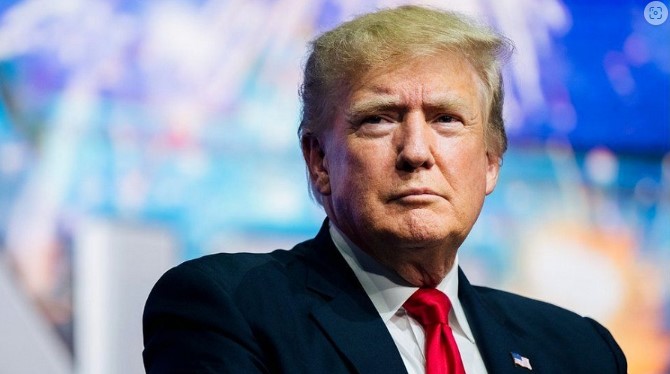
President Donald Trump has declared his intention to remove authority from individual US states to regulate artificial intelligence, unveiling plans for a federal executive order that would consolidate power exclusively at the national level.
The president’s announcement, delivered in a public post on his social platform, comes amid an escalating race among global powers to establish control, rules and influence over AI technologies shaping modern economies, security systems and public life. His move is already generating nationwide debate over federal power, innovation, and the balance between national leadership and state autonomy.
In his statement, Trump emphasized that the United States cannot afford fragmented or conflicting regulations at a time when countries such as China, the United Kingdom, South Korea and the European Union are accelerating their own AI governance frameworks. According to him, “one rulebook” is essential if the United States wants to retain its current technological advantage. The president argued that a unified standard would ensure predictability for companies, strengthen national competitiveness and eliminate what he described as disruptive “patchwork restrictions” emerging across states.
Over the past two years, various US states have introduced AI-related legislation targeting areas such as algorithmic transparency, consumer privacy, automated decision-making, and workplace surveillance. States like California, Colorado, Maryland and New York have either proposed or implemented sector-specific policies, with some pushing for more aggressive frameworks affecting data usage, facial recognition, generative AI, and employment-related AI tools. Industry players have repeatedly expressed concern that conflicting rules could make compliance more difficult, reduce investment incentives or force companies to limit deployment in certain states.
Trump’s proposed executive order aims to pre-empt these concerns by applying federal authority over interstate commerce and national security—two areas where presidents historically wield broad influence. The administration is expected to argue that AI, by nature, affects interstate economic activity and therefore requires centralized oversight. Federal lawyers are also preparing national security justifications, stressing that AI advancements touch military defence, cybersecurity, digital infrastructure and international competition. The White House believes these arguments will provide the strongest legal foundation for overriding state laws.
The president’s push for consolidation comes at a pivotal moment for the global AI industry. The United States continues to lead the world in private-sector innovation, with its largest technology firms dominating model training, chip manufacturing, cloud resources and global deployment. However, foreign governments—particularly China and the European Union—are rapidly constructing regulatory structures that could shape global standards. The EU recently implemented an expansive classification-based AI Act, imposing strict requirements on “high-risk systems” and banning certain applications outright. China, on the other hand, has rolled out multiple sets of rules governing deepfakes, recommendation algorithms and generative AI tools.
American policymakers and industry stakeholders are increasingly divided between two philosophies: one advocating for stricter guardrails to prevent societal risks, and another warning that excessive regulation could erode America’s edge. Trump’s announcement occupies a distinct space within that debate by attempting to eliminate variation, even before a final federal regulatory structure is fully established.
While the proposed executive order is expected to centralize AI oversight, it does not yet specify the nature of national rules the administration plans to put in place. Previous statements from the president have hinted at a more innovation-driven approach rather than one rooted in restrictive controls. Supporters say a unified system would simplify compliance for startups and multinational firms, enable standardized audits and ensure investments flow into US AI capacity rather than being slowed by bureaucratic inconsistency.
However, legal scholars anticipate major court challenges if the order attempts to nullify existing state laws. States have traditionally guarded their authority over consumer protection, civil rights, labour policies, business conduct and privacy rules. Efforts to override long-standing state controls may be contested in federal courts, which have historically weighed the balance of federal supremacy and state autonomy cautiously. Some experts warn that an outright pre-emption may be viewed as an overreach unless Congress takes legislative action.
Civil liberties groups and digital rights advocates argue that individual states play a critical role in identifying gaps left by the federal government. They say state-level innovation historically led to stronger national protections—pointing to examples such as the earliest data privacy laws, facial recognition bans, and algorithmic transparency mandates emerging from state legislatures and city councils. Opponents of the president’s approach fear that federal dominance without clear regulatory commitments could weaken consumer protections or delay safeguards around discrimination, misinformation, workplace monitoring and automated decision-making.
Large technology companies, however, have shown broad support for harmonized national standards. Executives from multiple AI companies have testified publicly that conflicting rules complicate product deployment, increase operational costs and slow innovation. Industry insiders believe that a federal framework—especially one perceived as less restrictive than Europe’s—could give US firms an expanded competitive advantage and prevent regulatory uncertainty from stalling development timelines.
The forthcoming executive order is likely to shape the next phase of America’s AI strategy, influencing not only domestic governance but also global relationships. Other countries frequently look to the US for regulatory cues, and a strong unified national policy may position Washington more powerfully in international negotiations over the future of AI standards, safety measures and digital trade.
The full text of the order has not yet been released. Political analysts expect significant pushback from states with active AI legislation and from congressional committees already reviewing AI policy proposals. As the administration prepares to formalize the directive, the broader political, economic and legal ramifications of stripping states of regulatory power will dominate national discussions in the weeks ahead.