Capital Market
Egypt Maintains Interest Rates As Inflation Persists

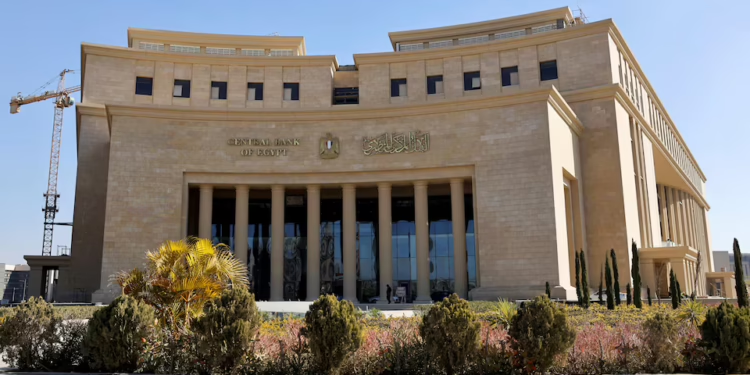
Central Bank of Egypt has retained its benchmark interest rates as policymakers continue to monitor inflationary pressures and geopolitical tensions affecting the regional and global economy.
The Monetary Policy Committee kept the overnight deposit rate unchanged at 19 per cent and maintained the lending rate at 20 per cent, citing elevated inflation risks and external economic uncertainties linked to the ongoing Middle East conflict.
According to Reuters, the decision aligned with market expectations as analysts had widely projected that Egyptian authorities would avoid policy adjustments amid concerns over renewed inflationary pressure from energy market volatility and geopolitical instability.
In its post-meeting statement, the central bank indicated that maintaining current rates was necessary to support monetary stability while authorities continue assessing inflation trends and broader macroeconomic conditions.
Read Also:
“The committee’s decision reflects an evaluation of both current and projected inflation developments under increasingly challenging global economic conditions,” the apex bank stated.
Policymakers also warned that escalating regional tensions could negatively affect economic growth and inflation expectations over the coming months.
The central bank noted that Egypt’s real gross domestic product growth slowed to 5 per cent during the first quarter of 2026 compared to 5.3 per cent recorded in the final quarter of 2025.
Authorities further cautioned that economic growth could weaken further during the second quarter as geopolitical tensions involving Iran, Israel and the United States continue to disrupt investor confidence and global trade sentiment.
“The external environment remains highly uncertain, particularly with ongoing regional developments capable of influencing both growth and inflation trajectories,” the bank stated.
The decision comes as several emerging market economies continue balancing inflation control with slowing economic growth and elevated external risks.
Recent inflation data in Egypt showed modest improvement in price pressures, although inflation remains significantly above the central bank’s medium-term target range.
Annual urban consumer inflation eased to 14.9 per cent in April 2026 from 15.2 per cent recorded in March, reflecting a slight moderation in headline inflation.
Core inflation, which excludes volatile food and fuel prices, also declined marginally to 13.8 per cent from 14 per cent in the previous month.
Despite the slowdown in inflation figures, policymakers maintained a cautious stance due to persistent external inflationary threats and uncertainty surrounding global commodity markets.
Egypt’s inflation target remains between 5 per cent and 9 per cent by the fourth quarter of 2026, leaving inflation levels significantly above the central bank’s preferred range.
The Egyptian economy has remained vulnerable to rising energy costs, currency pressures and external financing risks amid ongoing geopolitical instability across the Middle East.
“The central bank appears focused on preserving stability while maintaining enough flexibility to respond to further inflationary or geopolitical shocks if conditions deteriorate,” analysts said.