
Currencies
Naira Gains Strength Against Euro Pressure

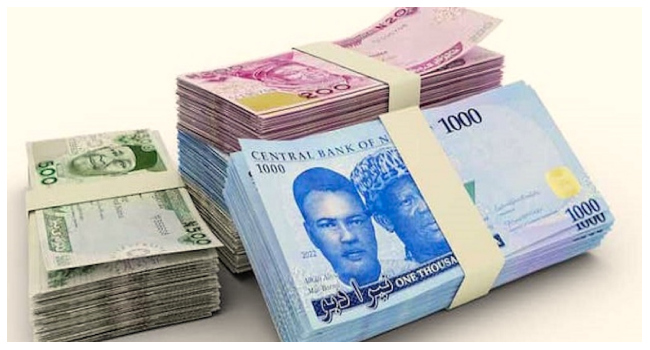
The Nigerian naira strengthened against the euro as the Central Bank of Nigeria’s decision to retain interest rates at 26.5 percent continued to support investor confidence and attract foreign portfolio inflows into the domestic economy.
The euro depreciated by about 5.4 percent against the naira, falling from N1,684 at the beginning of the year to around N1,592.5 in midweek trading, amid ongoing macroeconomic reforms introduced by the apex bank.
The Central Bank of Nigeria maintained its benchmark Monetary Policy Rate at 26.5 percent at the conclusion of the 305th Monetary Policy Committee meeting, reinforcing its commitment to price stability and exchange rate management.
CBN Governor Olayemi Cardoso said the committee adopted a cautious policy stance to anchor inflation expectations and safeguard macroeconomic stability.
According to Cardoso, ongoing reforms had “significantly bolstered the economy’s ability to absorb external shocks,” while the impact of global commodity and energy price shocks on domestic inflation had been moderated.
The apex bank has continued to implement a “willing buyer, willing seller” foreign exchange framework aimed at improving market transparency and boosting liquidity within the official market.
As part of the reforms, the CBN cleared outstanding foreign exchange obligations owed to investors and also expanded dollar access to Bureau de Change operators in a bid to bridge the gap between official and parallel market exchange rates.
Analysts said the reforms had contributed to improving sovereign confidence and reshaping international investors’ perception of the Nigerian economy.
The country recently received a sovereign credit rating upgrade from S&P Global Ratings, which raised Nigeria’s long-term foreign and local currency issuer ratings from ‘B-’ to ‘B’ with a stable outlook.
The rating agency cited improvements in exchange rate management, fiscal reforms, broadening tax revenues and a gradual reduction in the country’s debt-to-revenue ratio as major reasons for the upgrade.
Nigeria’s expanding domestic refining capacity has also helped reduce pressure on foreign exchange demand linked to fuel imports.
The gradual ramp-up of operations at the Dangote Refinery, which is approaching its 650,000 barrels-per-day refining capacity, has significantly lowered the country’s dependence on imported petroleum products.
Economists said the development was helping to protect Nigeria’s current account balance from external shocks while supporting foreign exchange reserve stability.
The International Finance Corporation recently partnered with the CBN to deepen local currency financing and improve currency risk management across critical sectors of the economy.
The initiative is expected to inject over $1 billion into the Nigerian economy and support investment growth in strategic industries.
Meanwhile, developments in the international foreign exchange market also influenced the movement of the euro against major currencies.
The euro weakened against the U.S. dollar following heightened geopolitical tensions and changing monetary policy expectations within the Eurozone and the United States.
The European Central Bank maintained its core deposit facility rate at 2 percent and the main refinancing rate at 2.15 percent, while raising concerns over persistent inflationary pressures driven by higher global energy prices.
Officials of the ECB warned that additional monetary tightening could become necessary if inflation remains elevated above the bank’s target threshold.
Olli Rehn cautioned that the Eurozone faced a difficult economic environment where further interest rate increases might be required to preserve policy credibility and manage inflation risks.
Currency traders also remained cautious over uncertainty surrounding possible negotiations between the United States and Iran over Tehran’s nuclear programme and tensions around the Strait of Hormuz.
Market sentiment was further shaped by hawkish signals from the U.S. Federal Reserve, with policymakers indicating the possibility of another interest rate increase in 2026.
The stronger outlook for the U.S. dollar limited the euro’s ability to sustain gains despite expectations of tighter monetary policy within the Eurozone.
Analysts noted that fears of slower economic growth across Europe also weighed on the common currency, preventing a broader rally against the dollar.
They added that while Nigeria continued to face inflationary and fiscal pressures, relative stability in the foreign exchange market and ongoing economic reforms had helped strengthen confidence in the naira in recent months.