Business Briefings
Global Trade Faces Deepest Disruption in 80 Years-Okonjo-Iweala

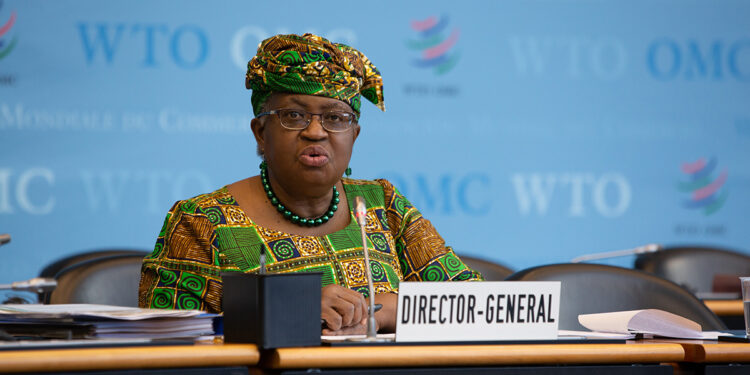
Global trade is currently undergoing its most severe disruption in more than eight decades, according to the Director-General of the World Trade Organization, Ngozi Okonjo-Iweala.
She made the remarks at the opening of the WTO Ministerial Conference in Yaoundé, Cameroon, where trade ministers from 166 member countries gathered to address mounting challenges confronting the global trading system.
The four-day meeting is focused on reviving multilateral trade cooperation amid widening divisions among member states, stalled negotiations, and a growing shift toward protectionist policies.
Read Also:
- Flutterwave CEO, Elumelu, Ovia Lead Nigeria’s Power Push for UK Capital Dominance
- Tinubu Expands CNG Initiative to Include Electric Vehicles
It also comes against the backdrop of geopolitical tensions, particularly conflicts affecting energy and supply chains, making it only the second time the WTO’s top-level conference is being hosted in Africa after the 2015 edition in Nairobi.
Speaking at the event, Okonjo-Iweala underscored the magnitude of the disruption and the need for countries to adjust to a rapidly evolving global order shaped by economic, environmental, and technological pressures.
“The world order and the multilateral system we used to know has irrevocably changed,” she said. “We cannot deny the scale of the problems confronting the world today.”
She further noted, “The scale of the problems confronting the world today, even before the conflict in the Gulf, destabilised trade in energy, fertiliser and food.”
The WTO is currently grappling with declining cooperation among major economies and a rise in unilateral trade actions that are putting pressure on the rules-based system.
Recent policy shifts in the United States have added to the uncertainty, including the imposition of broad tariffs affecting both allies and non-allies. African economies have also been impacted, facing baseline tariffs alongside higher reciprocal duties in some cases.
Stakeholders have warned that without meaningful outcomes from the Yaoundé conference, global trade fragmentation could deepen, further destabilising markets and weakening confidence.
Echoing these concerns, the Secretary-General of the International Chamber of Commerce, John Denton, cautioned that the situation could escalate significantly.
“From a business perspective, this could yet become the worst industrial crisis in living memory,” Denton said.